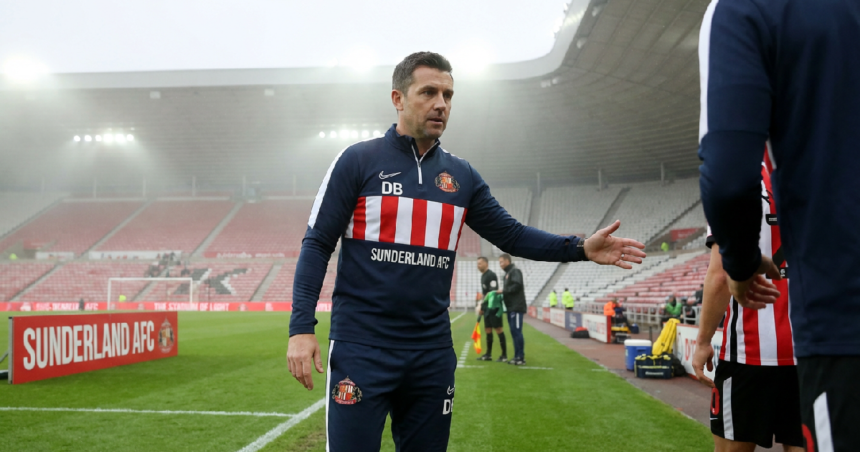
Sunderland have officially appointed Oxford United manager Des Buckingham as their new head coach on a multi-year deal, concluding a protracted search for a permanent successor to Michael Beale. The 41-year-old moves to the Stadium of Light following a period of significant uncertainty for the Wearside club, who have spent the last few months under interim management.
Buckingham’s arrival marks a strategic shift for Sunderland owner Kyril Louis-Dreyfus and sporting director Kristjaan Speakman. While the club has often prioritized young, continental coaches in recent cycles, they have turned to a domestic manager who has built a reputation for tactical flexibility and player development in the lower leagues. For Buckingham, the move is a massive step up from a stable position at Oxford to one of the most high-pressure vacancies in the Championship.
The long road to Buckingham
The search for a new leader at Sunderland has been anything but straightforward. Since the departure of Beale, the fans have endured a frustrating period of stop-gap solutions and cooling interest from high-profile targets. At various points, names like Will Still and Danny Rohl were heavily linked with the post, but negotiations often stalled over backroom staffing or transfer market control.
Buckingham emerged as a serious candidate late in the process. His work at Oxford United, where he succeeded Liam Manning, demonstrated an ability to handle mid-season transitions without losing momentum. That resilience is precisely what Sunderland’s hierarchy believes is necessary to stabilize a squad that has shown flashes of brilliance but lacked a cohesive identity for much of the 2025-26 campaign.
Critics might point to his lack of Championship experience as a risk, but those within the game view him as a coach on a steep upward trajectory. His background with the City Football Group and his time in the A-League have given him a more global perspective on the game than the average League One manager.
Expectations at the Stadium of Light
The mandate for Buckingham is clear: return Sunderland to the Premier League conversation. The club’s recruitment policy remains firmly fixed on identifying high-potential young talent, and and the new head coach will be expected to integrate these players into a starting XI that has struggled for consistency.
And while the fans will always demand results, there is a secondary requirement for “the Sunderland way”—an attacking, high-pressing style of football that resonates with the local community. Buckingham’s Oxford teams were noted for their width and bravery in possession, traits that should, in theory, translate well to the expansive pitch at the Stadium of Light.
However, he inherits a dressing room that has lacked a firm hand. The first task will be shore up a defense that has been porous during the interim period. If he can tighten the backline while maintaining the creative output of the club’s gifted midfield, the play-off spots may not be out of reach in the coming season.
Challenges and the Summer Window
The timing of the appointment is critical. By getting Buckingham in ahead of the off-season, Sunderland have avoided the “limbo” state that plagued their previous summer preparations. He will now have a direct say in upcoming transfer strategies, helping to identify the specific profiles needed to balance an often top-heavy squad.
There is also the matter of the fans. The Wearside faithful are among the most passionate—and demanding—in English football. They have grown weary of “projects” that seem to stall at the first sign of adversity. Buckingham won’t get a lengthy honeymoon period; he needs to show progress and tactical clarity from the opening day of pre-season.
But the credentials are there. Buckingham is known as a meticulous planner, someone who obsesses over video analysis and individual player data. In an era where Championship margins are thinner than ever, those marginal gains might be what finally pushes Sunderland over the line.
Frequently Asked Questions
Why did Sunderland choose Des Buckingham over more experienced options?
The hierarchy felt Buckingham’s modern coaching methods and his experience in multi-club systems aligned better with their long-term vision. They weren’t looking for a “firefighter” to manage for a season; they wanted a head coach who could develop young assets while implementing a specific style of play.
What will happen to the interim coaching staff?
While Buckingham typically likes to bring in his own trusted lieutenants, Sunderland usually prefers to keep a degree of continuity in the backroom. Discussions are reportedly ongoing regarding which members of the current staff will remain and who Buckingham will bring across from his former setup.
Is the Premier League an immediate goal for the new manager?
Sunderland’s history and stadium size mean the top flight is always the ultimate goal. However, the immediate priority is stability. The club wants to see a defined identity on the pitch first, believing that a consistent process will naturally lead them back toward the promotion spots.