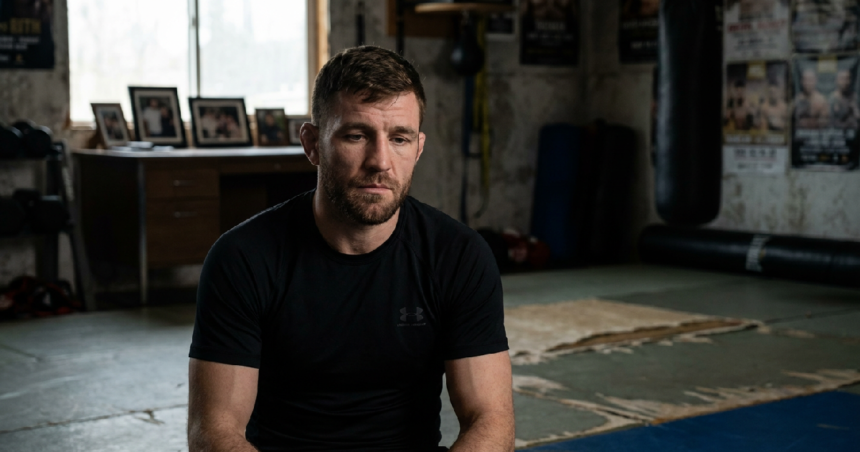
Chris Duncan has established himself as one of Scotland’s most resilient figures in the UFC lightweight division, but the source of that grit is rooted in a tragedy far more harrowing than anything experienced inside the Octagon. In a candid reflection on his journey to the professional ranks, the 31-year-old opened up about the murder of his mother, an event that occurred just days before he was scheduled to make his MMA debut.
The loss of a parent under any circumstances is devastating, but for Duncan, the timing and nature of the incident created a psychological burden that few athletes could endure. Rather than withdraw from the competition, Duncan chose to step into the cage while the trauma was still raw, setting the stage for a career defined by an almost supernatural ability to block out external noise.
For Duncan, the sport became both a sanctuary and a vessel for processing a level of grief that would have broken most young men. He hasn’t just survived in the UFC; he has thrived, carrying a reputation for a high-intensity style that mirrors the internal pressure he has managed for years.
The burden of a debut under fire
The transition from an amateur to a professional mixed martial artist is often cited as the most nerve-wracking moment in a fighter’s life. It is the point of no return where the hobby becomes a career. For Duncan, this milestone was eclipsed by a police investigation and the sudden, violent loss of his mother.
He recalls the period as a blur of emotional conflict. There is often a debate in sports psychology about the “distraction” factor of personal tragedy. Some find that the physical exertion of a fight offers a temporary escape, while others find the mental load impossible to carry. Duncan leanred into the former. By choosing to compete, he wasn’t ignoring the tragedy; he was attempting to honor a woman who had supported his athletic ambitions long before the UFC lights were a reality.
This admission sheds new light on Duncan’s fighting style. Known for being durable and willing to trade heavy shots, there is a sense of “nothing can hurt me worse than life already has” in the way he approaches his matchups. It explains why, even when rocked or under significant pressure, Duncan rarely shows the wide-eyed panic seen in less experienced fighters.
Finding purpose in the Scottish MMA scene
Scotland has produced its fair share of tough fighters, from JoJo Wood to Paul Craig, but Duncan’s story adds a layer of depth to the narrative of the “Scotty 2 Hotty” persona. He has often spoken about the pride he takes in representing his gym and his country, but this specific revelation about his mother’s death provides the context for his unwavering drive.
The UFC lightweight division is a shark tank. Every fighter has a “why,” a reason for waking up at 5:00 AM to cut weight and get punched in the face for a living. For Duncan, that “why” is deeply personal. It isn’t just about championship belts or performance bonuses; it’s about a legacy that was nearly derailed before it started.
By bringing this story to light now, Duncan isn’t looking for sympathy. Instead, he seems to be closing a chapter on his own development. Many fighters wait until retirement to discuss the demons they faced during their rise, but Duncan is doing it while still in his athletic prime, perhaps signaling a new level of mental clarity as he looks toward higher-ranked opponents.
What this means for Duncan’s Octagon future
The mental side of MMA is often more important than the physical. Knowing that Duncan has already navigated the worst-case scenario life can throw at a person makes him a dangerous out for anyone in the 155-pound division. There is a specific kind of freedom that comes with having nothing to fear.
As he continues to climb the rankings, Duncan remains a person to watch not just for his striking or his grappling, but for his psychological fortitude. He has proven that the Cage isn’t just a place for sport; for some, it’s a place for survival.
UFC Chris Duncan FAQ
How did Chris Duncan get into the UFC?
Duncan earned his way into the promotion through Dana White’s Contender Series. After a setback in his first appearance, he returned to secure a knockout victory that earned him a multifight contract with the UFC.
What is Chris Duncan’s fighting style?
He is primarily known as a heavy-handed striker with a background in kickboxing. However, his time training at top-tier facilities has allowed him to develop a well-rounded game, featuring aggressive wrestling and improved defensive grappling.
Where does Chris Duncan train?
While he maintains his roots in Scotland, Duncan has spent significant time training at American Top Team (ATT) in Florida, one of the premier MMA gyms in the world, to prepare for his high-level UFC bouts.