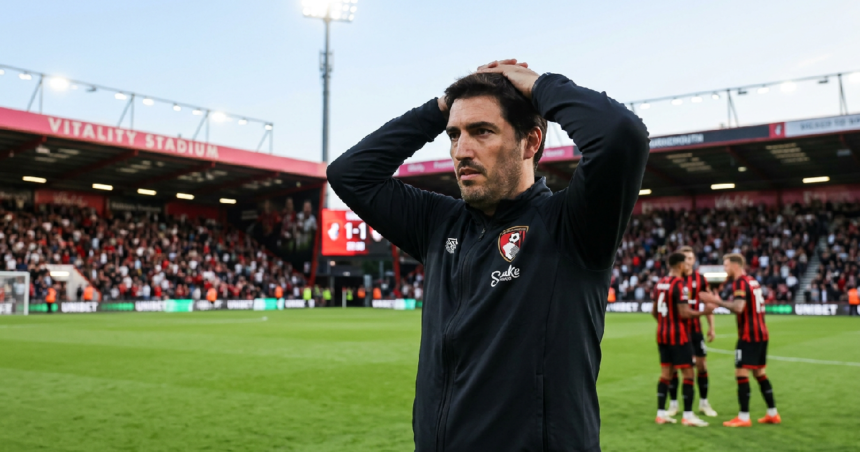
The shared frustration in the Bournemouth air was palpable as the full-time whistle signaled yet another afternoon of dropped points from a winning position. For a club that has spent the season defying expectations and punching above its weight, the realization is beginning to set in: the Cherries might lose out on a historic European berth not because they weren’t good enough to win, but because they were too willing to draw.
Andoni Iraola has transformed Bournemouth into one of the most proactive, high-pressing units in the Premier League. Their identity is no longer that of a side simply hoping to survive; they are a team that dictates tempo and harasses the elite. However, that aggressive style has come with a caveat. The physical toll of Iraola’s “kamikaze” press often leaves gaps in the final fifteen minutes—gaps that opponents have consistently exploited to rescue points that should have stayed at the Vitality Stadium.
The narrow margins of continental qualification
European qualification in the modern Premier League is a game of fine margins. While the traditional “Big Six” often dominate the conversation, the race for the remaining spots—be it the Europa League or the Conference League—is usually decided by who can grind out ugly 1-0 wins. Bournemouth, by contrast, have found themselves embroiled in high-scoring stalemates that satisfy the neutral but hinder their ambitions.
Every time a lead is surrendered, the gap between Bournemouth and their direct rivals for those seventh and eighth spots grows incrementally. It isn’t just about the points lost; it’s about the momentum stalled. When you look at the table, the sheer number of draws on the Cherries’ record stands out as a glaring anomaly for a team with such a high goal-scoring output. At this level, turning just two of those draws into wins would have likely secured their passport for next season.
Fatigue and the cost of Iraola-ball
There is a growing debate among tactical analysts regarding the sustainability of Bournemouth’s approach over a 38-game season. To play the Iraola way requires a level of aerobic fitness that is difficult to maintain into April and May. We are seeing late-game substitutions that suggest the drop-off in intensity is a design flaw rather than a personnel issue. When the press fails to land, the defensive line is left exposed.
Clubs like West Ham or Brighton, who have recently navigated these same European waters, found success by knowing when to “sit in” and kill a game. Bournemouth, laudably or stubbornly, only have one gear. They continue to chase a second or third goal when game management dictates they should be managing the clock. It makes for incredible television, but it might be the very thing that keeps them at home during Thursday night European matchweeks next year.
A summer of evolution ahead
The internal feeling at the club remains positive, and rightly so. Regardless of whether they leapfrog their rivals in the final weeks, this campaign represents a massive step forward. However, the hierarchy knows that the squad depth must be addressed if they are to sustain this level of performance without the late-game collapses.
As the clubs shift strategy for the summer transfer window, Bournemouth will likely be looking for players who offer a bit more tactical flexibility—midfielders who can maintain composure when the game becomes chaotic. The goal for next season will be to retain the attacking flair that has seen them climb the table while finding a way to shut the door on opponents when the points are within their grasp.
The final run-in
There are still points on the board to play for, but the math is becoming increasingly difficult. Bournemouth likely need a near-perfect run of results to bridge the gap, relying on those above them to stumble. Given their remaining fixtures, it won’t be easy. The narrative of their season is currently written as a “what if”—a story of a team that was good enough to lead against anyone, but perhaps not quite experienced enough to see it through.
Whether they make it to Europe or not, the Cherries have proved they belong in the upper tier of the league. But as any seasoned Premier League manager will tell you, draws are the silent killers of a European dream. To take that next step, Iraola must find a way to balance his tactical ideals with the cold, hard necessity of the clean sheet.
Bournemouth European Race FAQ
Can Bournemouth still qualify for Europe if they finish eighth?
It depends on who wins the domestic cups (the FA Cup and League Cup). If the winners of those trophies have already qualified for Europe via their league position, the spots trickle down to seventh or eighth place. Historically, eighth has been enough in some seasons, but it is never a guarantee.
Why has Bournemouth struggled to hold onto leads this season?
The primary reason cited by many analysts is the physically demanding nature of their pressing system. By the 75th minute, the intensity often drops, allowing technical opponents more space to create chances. Additionally, the squad lacks a few veteran “closers” who are adept at slowing the tempo of a game.
Is Andoni Iraola likely to change his tactics next season?
Unlikely. Iraola was hired specifically for his high-octane philosophy. Rather than changing the tactics, the club is more likely to recruit players with higher endurance levels or specific defensive profiles that allow them to defend deeper leads more effectively without losing their identity.