BCCI’s New Match Day Mandate for IPL Teams
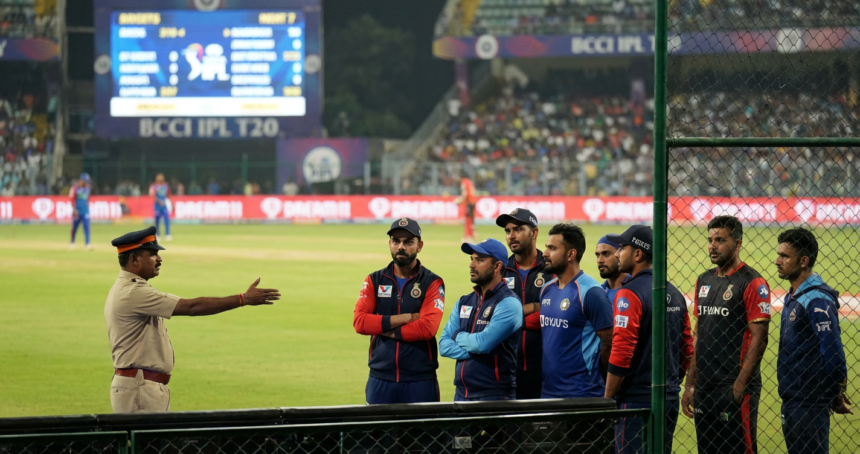
The Board of Control for Cricket in India (BCCI) has reportedly ushered in a new protocol for the Indian Premier League, a directive that stands to significantly alter the match day experience for benched players. Under these updated regulations, squad members not featuring in the playing XI will find their access to the field of play strictly limited during matches. This move signals a clear intent from the BCCI to streamline match day operations and potentially enhance the overall spectacle of one of cricket’s most lucrative tournaments.
For years, it wasn’t uncommon to see non-playing squad members mingling near the boundary ropes, sometimes even engaging with their active teammates during breaks in play. That level of casual interaction, it appears, is now a thing of the past. The new guidelines aim to create a more defined separation between those actively involved in the contest and those on the sidelines, a shift that could reshape team dynamics and dugout atmospheres across the league. It’s a subtle but impactful change that reflects an ongoing drive to refine the IPL’s operational framework.
The Rationale Behind the Restriction
While an official, detailed explanation from the BCCI remains anticipated, industry insiders suggest several factors are at play. Player safety is almost certainly a paramount concern. With the high intensity of IPL matches and the sheer speed of play, limiting the number of individuals on the immediate perimeter of the field could reduce the risk of accidental collisions or interference. There’s also the question of maintaining the integrity of the game. Restricting non-playing personnel’s presence could minimise any perceived avenues for unsanctioned communication or potential distractions, ensuring the focus remains squarely on the live action.
Furthermore, a more controlled environment around the playing area aligns with global best practices in major sporting leagues. Professionalism and the optics of the game are vital for a league with the IPL’s international standing. This new rule could be seen as a step towards standardising the match-day experience, bringing it closer to the rigorous protocols observed in other elite competitions worldwide.
Impact on Team Management and Player Routines
This directive won’t just affect the players; it presents a fresh challenge for team management and support staff. Coaches will need to adapt their pre-match warm-up routines and in-game communication strategies. Previously, benched players might have been more actively involved in fielding drills or delivering messages. Now, those roles will likely need re-evaluation. The spatial limitations on the field edge mean that only essential personnel will be permitted, necessitating a more organised and efficient approach to technical area management.
For the players themselves, particularly those who find themselves consistently on the bench, it could mean a psychological adjustment. While a commitment to their respective teams remains unwavering, the physical separation might subtly alter their sense of immediate involvement in the live action. This isn’t to say their role diminishes, but their visible presence will certainly change. Maintaining a cohesive team spirit, even with new restrictions, will be crucial for IPL franchises. This kind of adaptation is a constant for teams, similar to how a Welsh county secures an Australian pace boost, integrating new talent and strategies into their existing framework.
A Broader Trend in Sports Governance
The BCCI’s reported decision isn’t an isolated incident in the world of professional sports. Governing bodies frequently introduce new regulations to address evolving needs, whether for safety, competitive balance, or enhancing the viewer experience. We’ve seen similar efforts in other sports to control sidelines and technical areas. In rugby, for instance, league organisers often mandate specific operational frameworks for clubs, sometimes even extending to financial requirements. It echoes the kinds of strategic moves seen when Harlequins appoint new leadership for rugby operations, underscoring the broader trend of leagues asserting greater control over their competitions and clubs refining their structures.
These rules, while sometimes initially met with adjustments, are typically implemented with the long-term health and reputation of the sport in mind. The IPL, already a global powerhouse, is clearly looking to solidify its standing as a world-class sporting event, where every aspect of the match day is managed with precision and professionalism.
The Road Ahead: Adaptation and Oversight
As the next IPL season approaches, all ten franchises will be meticulously reviewing these new protocols, integrating them into their operational plans. There will undoubtedly be a period of adaptation. Teams will need to ensure their support staff are fully aware of the new boundaries and responsibilities, avoiding any potential infractions that could lead to penalties.
The BCCI, on its part, will likely be monitoring the implementation closely. Feedback from teams, players, and match officials will be essential in gauging the effectiveness of the new rule. While the immediate focus is on the upcoming season, such regulations are rarely static. They evolve as the sport does, always with the aim of striking a balance between spectacle, fairness, and the well-being of all participants. This latest directive marks another chapter in the IPL’s continuous effort to refine and elevate its presentation on the global stage, ensuring that the focus remains on the thrilling cricket at its heart.