The aura surrounding Bayern Munich has shifted from domestic dominance to something far more imposing on the continental stage. While the Bavarian giants have long been the benchmark for consistency in German football, their current trajectory suggests a side that has mastered the art of high-volume scoring and tactical discipline. They aren’t just winning matches; they are neutralizing opponents with a clinical efficiency that has put the rest of Europe on high alert.
In the domestic circuit, Bayern’s goal-scoring output has reportedly reached levels that challenge established norms. Under the current tactical setup, the team has found a rhythm that allows for sustained pressure throughout the match. This isn’t the slow, possession-based approach of previous eras, but a vertical, aggressive style that is designed to exploit defensive lapses. The rate at which they are finding the back of the net is widely considered to be among the most productive in the league’s recent history, setting a high bar for any side hoping to keep pace in the title race.
The depth of the squad allows for this relentless pace. Even when rotation is necessary to manage the heavy spring schedule, the quality of the replacements ensures that the tactical philosophy remains unchanged. This internal competition has created an environment where attacking players are expected to produce consistently, making the side difficult to scout or contain over the course of a two-legged tie.
There is a growing sense among observers that this iteration of Bayern Munich is specifically tailored for the demands of the Champions League knockout stages. Historically, teams that dominate their domestic leagues can sometimes struggle with the intensity of elite European opposition. However, Bayern has managed to maintain a level of performance that appears to translate effectively to the international stage. They possess a notable ability to dictate the tempo against different styles of play, from low-block defensive units to fellow high-pressing giants.
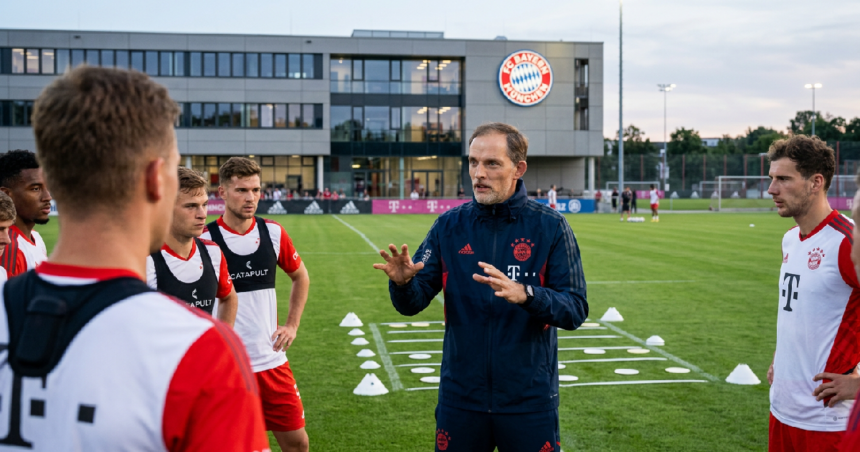
And it is this flexibility that makes them such a force. Reports regarding the club’s internal focus suggest that preparation for the latter stages of European competition has been a long-term priority. The physical conditioning of the players appears to be trending toward a peak at the critical juncture of the season, and the composure shown in high-pressure moments indicates a group that is becoming comfortable with the expectations placed upon a tournament favorite.
Tactically, the shift has been toward greater unpredictability. By moving away from over-reliance on a single focal point, the scoring burden is being shared across the forward line. This fluidity is intended to disrupt modern defensive structures, which often rely on neutralizing specific threats. When Bayern moves into the final third, the interchanging of positions creates gaps that are exploited through quick, vertical passing sequences.
The defensive stability remains a core component of their success. While the headlines often focus on the volume of goals scored, the transition play—the speed at which they move from losing possession to regaining it—is what truly defines the current system. This defensive positioning is designed to prevent opponents from launching effective counter-attacks, often keeping play restricted to the opposition’s half for long stretches.
As the final months of the campaign approach, the focus remains on maintaining this momentum. In the Bundesliga, the objective is to secure the primary position with enough stability to allow for concentration on the European front. The history of the club dictates that a successful season is measured by silverware, and the current squad appears focused on that legacy. If they maintain this form, they are expected to be among the primary contenders for the top honors in both domestic and continental football. The combination of historical pedigree and a tactical system that thrives under pressure makes Bayern Munich one of the most respected names in European competition today.