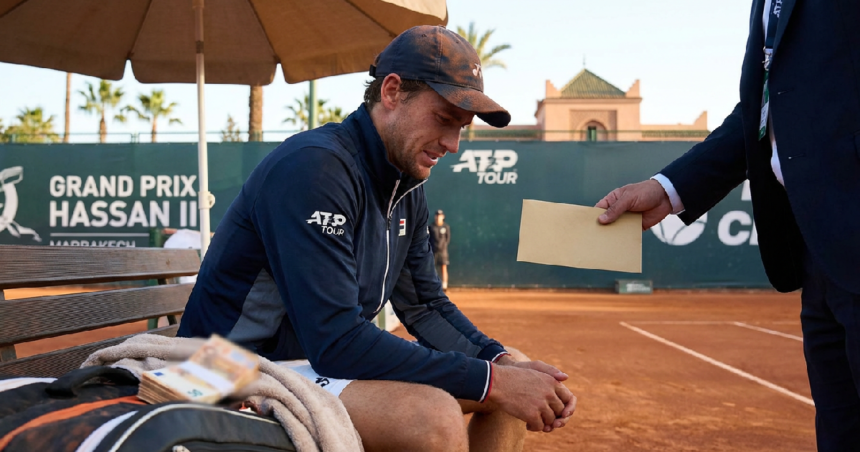
The integrity of professional tennis has been thrust back into the spotlight following a startling admission from a competitor at the ATP Marrakech tournament. In a sport that has long grappled with the shadow of illicit betting, the revelation that a player was offered $50,000 to throw a single match serves as a stark reminder that the governing bodies remain locked in a high-stakes battle against organized crime.
While the ATP Tour often highlights the glitz of its top-tier events, the reality for those outside the elite top 50 is often one of tight margins and high expenses. It is in this environment that match-fixers operate, targeting athletes with sums of money that can represent an entire year’s worth of prize money. The approach reported in Marrakech underscores a persistence by betting syndicates that continues to undermine the sport’s credibility.
The $50,000 Approach in Marrakech
The details emerging from the Grand Prix Hassan II in Marrakech suggest a sophisticated attempt to compromise the competition. According to the player involved, the offer was not a vague suggestion but a specific financial lure aimed at manipulating the outcome of a match. For a tournament of this level, where early-round losers might take home a fraction of that amount, the temptation is designed to exploit the financial vulnerability inherent in the professional circuit.
And yet, this is far from an isolated incident. The International Tennis Integrity Agency (ITIA) has been increasingly active, handing out bans and fines to players connected to betting syndicates. But the Marrakech revelation highlights a shift in tactics: the sheer size of the bribe. Most reported fixes in recent years have involved smaller sums at the Challenger or Futures level. A $50,000 offer suggests that the stakes—and the potential payouts for the syndicates—have reached a new plateau.
Pressure Points on the Professional Circuit
To understand why these offers keep coming, one has to look at the economics of the tour. Unless a player is consistently reaching the second week of Grand Slams, the costs of travel, coaching, and accommodation can easily outstrip earnings. This creates a fertile ground for corruption. While the top stars are millionaires several times over, the “middle class” of tennis often struggles to break even.
The ITIA has implemented rigorous reporting requirements, and players are technically obligated to report any corrupt approach immediately. However, the fear of retribution or the “snitch” stigma can sometimes lead to silence. In this case, the transparency shown in Marrakech is being viewed as a positive step, helping to pull back the curtain on a practice that thrives in the dark corners of the locker room.
The ITIA and the Fight for Clean Sport
The governing bodies have not been idle. The ITIA frequently issues updates on sanctioned players, often involving those who failed to report approaches or who actively participated in spot-fixing—manipulating specific points or games rather than the entire match result. But the Marrakech incident suggests that the “fixers” are becoming bolder, moving their sights toward established ATP 250 events.
Critics argue that the only way to truly solve the problem is to resolve the pay disparity in the sport. If players at all levels could sustain a career without financial desperation, the leverage held by betting syndicates would evaporate. Until then, the tour relies on the moral compass of its athletes and the vigilance of security investigators.
What This Means for the ATP Tour
The fallout from this revelation is likely to result in increased security protocols at smaller ATP events. We may see tighter restrictions on “courtsiding”—the practice of transmitting data from the stands to bettors before the official feed updates—and more aggressive education programs for players entering the main draw. For now, the Marrakech story serves as a cautionary tale: the integrity of the game is only as strong as its least-paid professional.
Frequently Asked Questions
How do match-fixers usually contact tennis players?
Historically, approaches were made in person at hotels or through social media. However, syndicates are becoming more sophisticated, often using intermediaries who may already have some connection to the tennis world to build trust before making a financial offer.
What are the penalties for match-fixing in tennis?
The ITIA enforces a zero-tolerance policy. Penalties can range from multi-year suspensions and heavy five-figure fines to lifetime bans from all professional tennis activities, including coaching and attending sanctioned events.
Why is tennis targeted more than other sports?
Because it is an individual sport, a fixer only needs to corrupt one person to guarantee a result, whereas in football or basketball, multiple players or officials would need to be involved. Additionally, the high volume of matches played globally every day provides constant opportunities for betting manipulation.