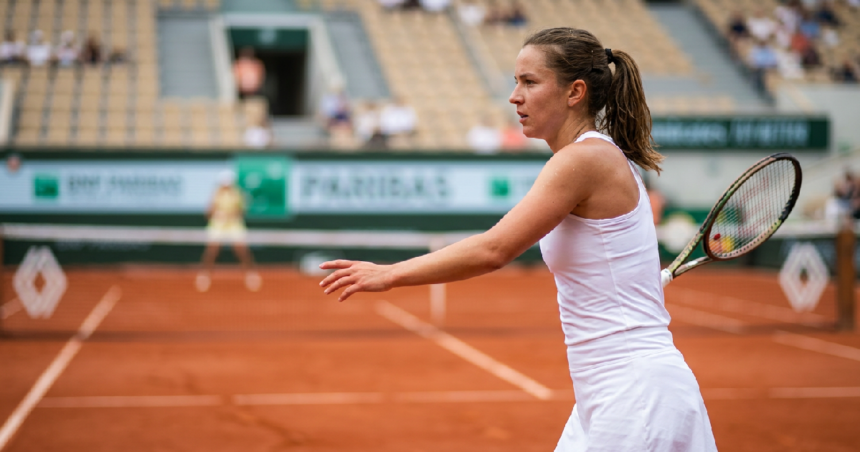
Seven-time Grand Slam champion Venus Williams has tipped Polish qualifier Maja Chwalinska to upset Mirra Andreeva in the Roland Garros final, scheduled for Saturday, June 6, 2026. Speaking ahead of the championship match, Williams highlighted Chwalinska’s unorthodox style as a potential stumbling block for the teenage star.
The matchup identifies a rare moment in tennis history where a qualifier has reached the final stage of a major tournament.
The pairing is widely considered one of the most unexpected in recent Grand Slam history, ensuring a brand-new major champion will be crowned in Paris. Mirra Andreeva reached the final after a dominant run through her draw, while 23-year-old Maja Chwalinska beat the odds by advancing through three rounds of qualifying.
Williams believes this “Cinderella story” trajectory gives the underdog a psychological and tactical edge that shouldn’t be overlooked.
During an appearance on TNT Sports, Williams explained that the modern women’s game is increasingly defined by power and speed, making Chwalinska’s “different” approach highly effective. By “rolling the ball” rather than hitting with flat pace, the Pole forces opponents into a state of tactical confusion.
This variety could lead to her rival overhitting or overthinking the match, which often results in premature exits for higher-ranked players.
Venus Williams analyzes the tactical advantage of unfamiliarity
The element of surprise is Chwalinska’s greatest weapon according to Williams, who noted that many players on the tour have never faced the Pole on court. While the Polish star has had the opportunity to study everyone else’s game, the rest of the field remains unfamiliar with her specific rhythms.
This lack of data can be unsettling for a opponent like Andreeva, who must adapt to a style she has likely not encountered in the junior or professional ranks.
Williams drew on her own professional experience to explain the mental burden of being the favorite against an “upstart” in a major final. She admitted that during her career, she sometimes struggled to play her best tennis when facing an opponent she was “supposed to win” against. The pressure of maintaining expectations can often hinder the performance of the more established player in high-stakes environments.
This match coincides with a busy season for international sports, where stars in various fields are looking to solidify their legacies. Similar to how Luke Littler has shown unexpected leadership at a young age in darts, these two finalists are rewriting the expectations for the next generation of athletes.
Andreeva has already made history by reaching the final, but Williams insists the teenager will have a lot to think about on court.
Ranking rules create a potential Wimbledon qualifying hurdle
Despite her success in Paris, Chwalinska faces a peculiar logistical challenge regarding the upcoming grass-court season. Because Wimbledon utilizes ranking data from before the start of Roland Garros, the Pole is currently listed as world number 114. This positioning is insufficient for direct entry into the main draw at the All England Club, creating a bizarre scenario for a potential Grand Slam champion.
To avoid competing in the qualifying rounds for a second consecutive major, the 23-year-old will likely require a wildcard from tournament organizers. This has placed Wimbledon officials in a difficult position, as numerous players are competing for a limited number of invitation spots. As seen in recent sport news updates, logistical frameworks sometimes struggle to keep pace with rapid rises in individual performance.
Chwalinska may not view the prospect of qualifying as a significant deterrent, given that she has already navigated that path to reach the final in Paris. Her resilience throughout the last two weeks has proven her ability to handle high-volume match counts.
Whether she secures the trophy or not, her surge through the draw remains the defining narrative of this year’s tournament on the clay courts of France.
What the final means for the WTA Tour landscape
The result of tomorrow’s match will serve as a definitive statement on the depth of the current women’s game. Mirra Andreeva enters as a heavy favorite in the eyes of many fans, but the endorsement from Williams suggests the gap between the two finalists is narrower than the rankings suggest.
Williams eventually named Chwalinska as her pick to win the title, completing what she termed a fairytale run.
If the Polish qualifier manages to pull off the victory, she will join a very short list of players to win a major after starting in the qualifying draw. Such an outcome would signify a shift in how players prepare for unorthodox styles in an era dominated by baseline aggression.
For Andreeva, the final is another step in her meteoric rise, regardless of whether she leaves Paris with the silverware.