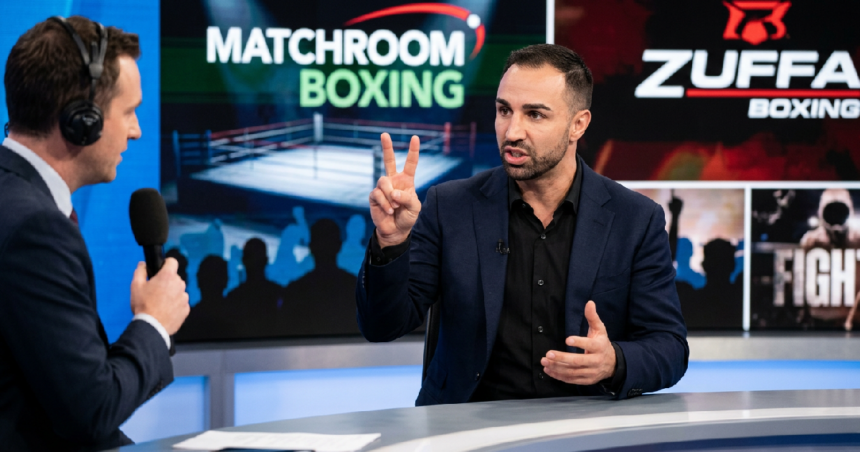
Paulie Malignaggi has cast doubt on the immediate impact of Dana White’s foray into the boxing world, reportedly describing the UFC president’s early promotional efforts as “average” when compared to the established resume of Eddie Hearn. The former world champion’s comments come amid a heated industry debate regarding whether White’s previous success in mixed martial arts will naturally translate to the complex landscape of professional boxing.
The critique follows recent suggestions from rival promoters that White’s experience building the UFC makes him a more effective operator than Hearn. Malignaggi, however, remains unconvinced that financial backing alone will disrupt the traditional boxing hierarchy. He suggests that the intricacies of the “sweet science” require a specific promotional finesse that White has yet to demonstrate within this particular sport.
This skepticism highlights a growing rift between the centralized model of MMA and the often-fragmented world of boxing. While many see White as a potential outsider capable of fixing long-standing structural issues, others believe the power dynamics of individual fighters and sanctioning bodies will prove difficult to overcome. Much like how Makhachev targets two-division glory in the cage, White is attempting to master a second combat territory, but he faces a steep learning curve.
Establishing Promotional Value Beyond Capital
Malignaggi’s core argument centers on the idea that Zuffa Boxing lacks the historical weight necessary to be ranked alongside major players like Matchroom Boxing. According to industry reports, he believes that the boxing public has not seen enough high-level output from White’s venture to justify the high praise it is currently receiving. He noted that even with significant resources, a newcomer can struggle if they do not understand the tribal nature of the sport’s fan base.
Successfully promoting a fighter requires more than just signing checks. It involves managing the requirements of multiple sanctioning bodies, negotiating cross-promotional hurdles, and identifying talent that can carry a television network. Malignaggi argues that until Zuffa Boxing delivers a consistent series of marquee events, comparing White to a seasoned promoter like Hearn remains premature.
Other boxing insiders have echoed this sentiment, suggesting that White’s venture is still in a developmental phase. For many who have spent their lives in the boxing industry, the notion that a promoter can be labeled the best without having steered a major star from a debut to a world title is seen as a stretch.
The Success of the Matchroom Model
The comparison between White and Hearn persists because of Matchroom’s extensive reach. Over the last several years, Hearn has expanded his operations significantly, moving from a UK-based promotion to a global firm with interests in the United States and the Middle East. Malignaggi pointed to the volume of world champions and the frequency of cards as evidence that Hearn currently holds the advantage.
The ability to operate in diverse markets has set a high standard for anyone entering the boxing space. The consistency of these events ensures that the brand remains at the forefront of the sport. Just as the latest sport news updates typically focus on those who are most active, the boxing world prioritizes promoters who can keep their fighters busy and visible.
Zuffa Boxing and the Recruitment Phase
Despite the criticism, White has reportedly been active in building a foundation for his new project. Zuffa Boxing is expected to pursue top-tier talent and has already been linked to several prominent names in the cruiserweight and welterweight divisions. There are reports that the company is looking to host major events in the United Kingdom to establish a European foothold.
While several fighters are believed to have already signed with the organization, critics wonder if the promotional style will actually offer anything different. The primary question remains whether White will implement a UFC-style structure where he holds more control over the matchups, or if he will be forced to play by boxing’s traditional, and often slower, rules.
Obstacles for the New Venture
The long-term viability of White’s boxing project depends on its ability to overcome the sport’s inherent politics. Unlike the UFC, where the organization is the brand, boxing and its fans are often loyal to individual fighters. Navigating the demands of the four major sanctioning bodies is a hurdle that even the most experienced agents find difficult.
Future success will likely be measured by whether Zuffa Boxing can create an iconic moment that defines its presence in the sport. The industry is currently in a state of flux, and a major event could shift the balance of power. Just as Rousey vs Carano shaped the modern era of women’s combat sports, White needs to find a way to leave a permanent mark on the boxing landscape.
For now, the boxing establishment appears content to wait for tangible results. Until White can produce a world champion or a pay-per-view event that breaks records, he may find it difficult to shake off the “average” label given to him by veteran commentators like Malignaggi.