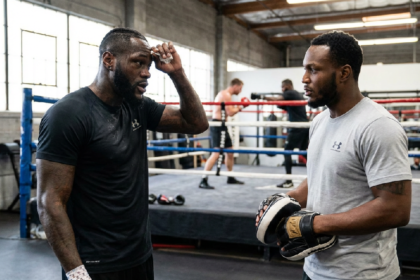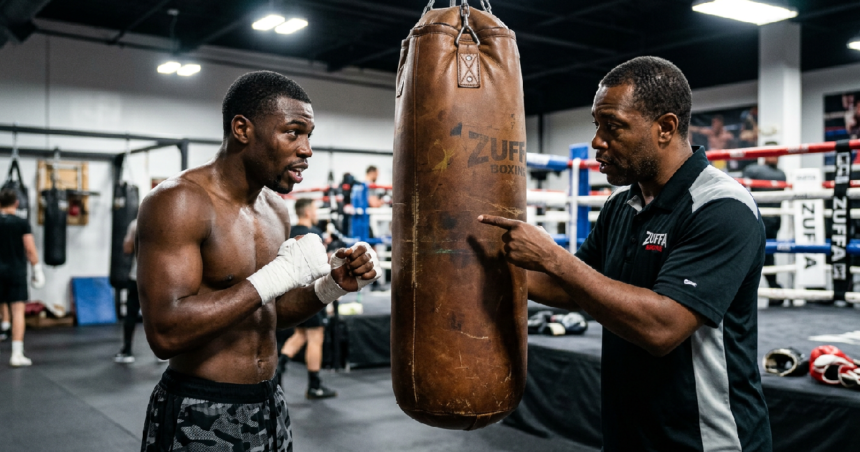
Renowned boxing trainer Stephen Edwards has signaled his confidence in Richardson Hitchins, suggesting the 140-pound contender possesses the technical foundation required to move up and claim a world title at welterweight. While the move would represent a step up in weight, Edwards indicated that the boxer’s mechanical soundness makes him a viable threat in a 147-pound division currently in a state of transition.
Hitchins has established a reputation as one of the most disciplined tacticians in the sport, but his journey toward a championship is complicated by the evolving promotional landscape. Industry observers are closely watching how the fighter’s career will be handled under the Zuffa Boxing banner. The involvement of Dana White’s organization has led to widespread speculation regarding whether Hitchins will pursue the traditional four-belt path or if his future lies within a more centralized, organization-focused model.
The transition to welterweight offers Hitchins a chance to test his defensive skills against larger, more powerful opponents. Edwards believes the fighter’s use of range and a disciplined jab could neutralize the natural size advantages of rivals in the higher weight class. This clinical style is what has propelled other elite combat sports athletes to seek greatness; for instance, as Makhachev targets two-division glory in the octagon, Hitchins aims to replicate that level of technical dominance in the boxing ring by frustrating aggressive opponents with precision.
Strategic Implications of the Zuffa Boxing Model
The primary question surrounding the career of Hitchins involves the specific business structure Zuffa Boxing intends to implement. If the company mirrors the UFC’s operational blueprint, the focus may shift away from the traditional sanctioning bodies like the WBC or IBF. Instead, the promotion could prioritize internal rankings and proprietary titles, potentially providing Hitchins with high-profile headlining opportunities that bypass the usual belt politics.
Such a model would rely on in-house matchmaking to streamline the delivery of major fights. While this approach can simplify the negotiation process, it remains to be seen how it will affect a fighter’s legacy in a sport that has historically valued undisputed status across multiple organizations. Historically, the shift toward self-contained ecosystems has proven successful in mixed martial arts, where figures like Rousey and Carano helped influence the sport’s growth toward a more consolidated promotion-led structure.
Addressing Activity Levels and Marketability
For Hitchins to reach the pinnacle of the welterweight division, he will likely need to address concerns regarding his recent activity levels. Despite his technical brilliance, some critics argue that a lack of consistent momentum has hindered his path to mainstream stardom. Moving to 147 pounds serves as a potential reset, but the expectation for more frequent and high-stakes performances is significant as he enters his physical prime.
Reports suggest that past negotiations for Hitchins have occasionally stalled due to the search for specific terms or premium matchups. To truly thrive under a new promotional banner, the Brooklyn-born fighter may need to embrace a more active schedule. Sustained visibility in the ring is often the only way to build the kind of drawing power that allows a fighter to transcend the need for sanctioning body belts.
Potential Matchmaking and the New Boxing Architecture
One potential avenue for Hitchins involves high-stakes bouts against other prominent names linked to the same promotional interests. A clash with Conor Benn, for example, represents the type of straightforward matchmaking that could avoid the “promoter wars” that frequently prevent major events from happening. These types of matchups are what fans often demand: the most skilled athletes facing one another without the interference of rival networks.
In this new landscape, a fighter’s individual brand often carries as much weight as a physical title. Just as Israel Adesanya remains a headliner regardless of the specific circumstances of a bout, Hitchins has the potential to become a primary attraction based on his personality and ring IQ. If Zuffa Boxing chooses to prioritize marketable “super-fights,” Hitchins could find himself in a lucrative position that redefines what it means to be a champion in the modern era.
Whether this trajectory leads to a collection of world titles or a new form of sporting prestige remains uncertain. Edwards’ assessment confirms that the talent is present, but the boxing world is now waiting to see if the Zuffa strategy will favor traditional glory or a fundamental shift in how the sport is organized.