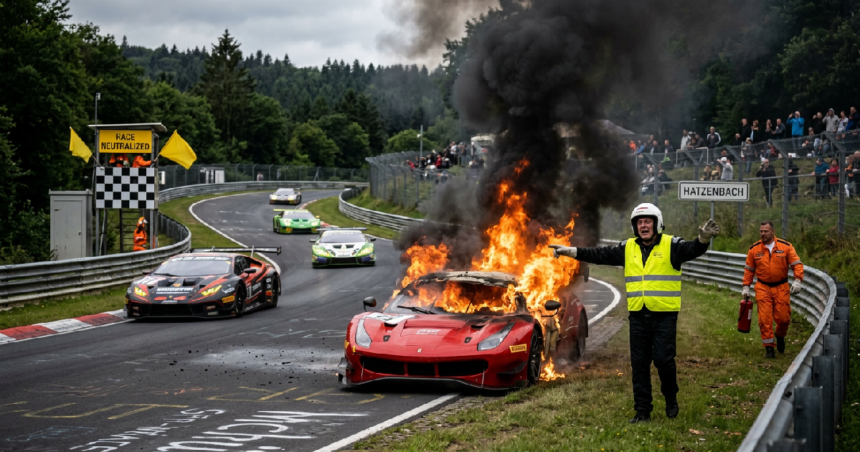
The motorsport community is mourning following a fatal incident during an endurance racing event at Germany’s storied Nürburgring Nordschleife circuit. The tragedy occurred during a competitive session on a day when the paddock’s profile was heightened by the presence of Formula 1 champion Max Verstappen, who was reportedly participating in the event as part of a sports car entry.
Details regarding the exact nature of the accident remain limited as local authorities and race organizers conduct an investigation into the circumstances. The Nordschleife, often referred to as the “Green Hell,” is widely considered one of the most demanding and dangerous permanent racing facilities in the world. Its winding layout and unpredictable Eifel mountains weather have long presented a unique challenge to even the most seasoned professional drivers.
The news cast a somber shadow over the proceedings, which had initially drawn international attention due to the high-profile entries from across the racing world. While the presence of figures like Verstappen often brings a celebratory atmosphere to such events, the risks inherent in the sport have once again come to the forefront of the discussion.
Tragedy at the Nordschleife Stuns Motorsport Community
The incident took place during the endurance racing calendar, a series known for its mix of professional works teams and privateer entries. While safety standards in modern motorsport have advanced considerably over the last decade, the sheer scale and character of the Nürburgring present obstacles that few other modern tracks do. The circuit’s narrow corridors, limited runoff areas, and extreme elevation changes continue to test technical and human limits.
Organizers confirmed that the driver received immediate medical attention following the crash, but the injuries sustained were reportedly unsurvivable. Out of respect for the individual’s family and the ongoing investigation, the identity of the driver has not yet been formally released. It is common practice in such scenarios for the event to be halted or significantly altered as a mark of respect and to allow safety crews to clear the scene effectively.
Just as Piastri leads rain-hit second practice at Suzuka highlights the skill required to manage high-performance machinery in difficult conditions, the events at the Nürburgring serve as a stark reminder of the thin margin for error in competitive racing. The circuit has seen numerous safety upgrades in recent years, including resurfacing and improved fencing, yet it remains a venue where the risks are notably higher than at many standard Grand Prix facilities.
Verstappen Presence Highlights Growing Interest in Endurance Racing
The participation of F1’s leading star in a regional endurance event underscores a trend among top-tier drivers seeking challenges outside the Grand Prix calendar. Max Verstappen, known for his relentless pursuit of racing opportunities both on asphalt and in the virtual world, had entered the event to compete in multi-class sports car racing during a break in his primary schedule.
However, the transition from the highly controlled environment of Formula 1 to the frantic, high-traffic nature of endurance racing at the Nürburgring is significant. In these races, the performance gaps between the fastest GT3 machines and lower-class cars can create high closing speeds, particularly through the blind corners of the forest sections. This specific event was seen as a way for Verstappen and other professional drivers to maintain their competitive edge.
The intersection of amateur and professional racing is what gives the Nürburgring its distinct character, much like how Luke Littler leads technical drills for England teammates shows different levels of experience blending in competitive sport. When accidents occur in this environment, they often reignite the debate over whether the track can ever truly be made safer by modern standards without destroying the features that make it iconic.
Improving Safety Protocols in Multi-Class Events
In the aftermath of the crash, questions are expected to be raised regarding the speed differentials between various classes of cars. The Nordschleife frequently hosts races with a high volume of cars on track simultaneously, ranging from factory prototypes to road-based production vehicles. Managing the flow of traffic during high-speed qualifying and racing laps is a constant logistical challenge for race control.
Experts suggest that the investigation will look closely at vehicle telemetry and track-side footage to determine if mechanical failure or driver error played a role, or if the layout of the track itself contributed to the severity of the impact. The racing community has long defended the Nürburgring as a heritage circuit, but fatalities bring renewed pressure to modernize the facility further where possible.
The Road Ahead for Nurburgring Endurance Series
The future of the current season is expected to proceed, though likely with additional safety briefings for all entrants. For many drivers, the danger is an accepted part of the allure of the Nordschleife, but for the governing bodies, the priority remains the prevention of loss of life. Plans for any immediate changes to track regulations are typically discussed in the weeks following a formal report.
As the sport moves forward, the balance between preserving the history of a challenging track and ensuring the safety of those who race on it remains precarious. Just as recent updates from Aintree and the World Cup reflect shifting dynamics in global sport, the endurance racing world must now reflect on how to honor those lost while safeguarding the future of the competition. The loss of a competitor is always a tragedy, and at a place as storied as the Nürburgring, it resonates throughout the entire world of motorsport.