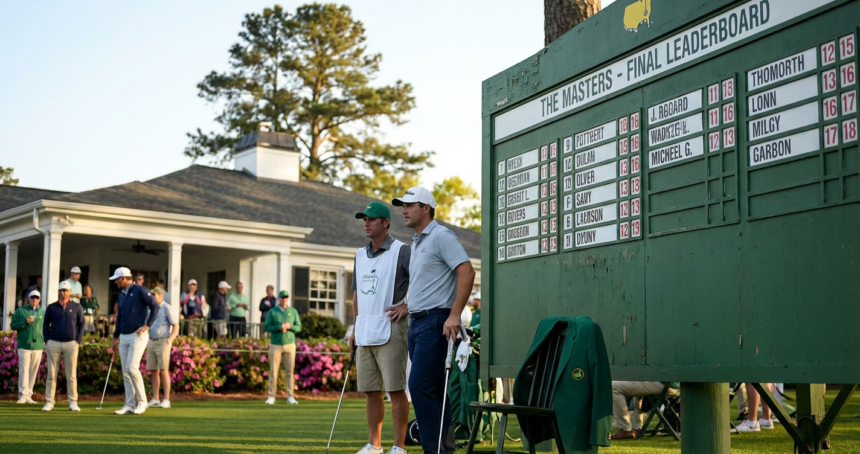
The gates of Augusta National have closed on another edition of the Masters, leaving the golf world to dissect a week that tested the mettle of the world’s best players. While the green jacket remains the ultimate prize, the closing facts and figures from this year’s tournament reveal a deeper story of shifting dynamics within the professional game. This was a week defined by brutal conditions, surprising collapses, and a leaderboard that mirrored the current hierarchy of global golf.
Augusta National presents a grueling challenge
Expectations for low scoring were quickly dampened as the wind became a primary protagonist in the tournament’s narrative. Players found themselves contending with gusts that made club selection a matter of guesswork, transforming the pristine fairways of Augusta into a psychological battlefield. Reports from the grounds indicated that even the most seasoned veterans struggled to find a rhythm, with several high-profile names failing to navigate the opening two rounds successfully.
The difficulty of the course was reflected in the scoring averages, which trended higher than in recent years. This wasn’t merely a test of ball-striking but one of patience. The undulating greens, always a signature challenge, were made even more treacherous by the dry, fast conditions. As the tournament progressed, the field was thinned out, leaving only those who could marry technical precision with a resilient mental approach.
Veterans and newcomers face contrasting fortunes
One of the most compelling aspects of the final data is the performance gap between established major champions and the younger generation making their Masters debuts. While some experienced hands relied on their knowledge of the course to salvage respectable finishes, others found that past success offered little protection against the mounting pressure of the back nine on Sunday.
The tournament also highlighted the ongoing debate regarding the competitive sharpness of players across different professional circuits. Observers noted that the intensity of the Masters served as a great leveler, rewarding those who had maintained a consistent schedule of high-stakes competition in the build-up to the season’s first major. For some, the lack of competitive repetitions appeared to manifest in crucial errors during the closing stages of the weekend.
Statistical trends shaping the future
Looking at the data gathered by analysts, a few specific trends stood out. Putting remains the undisputed king at Augusta, but this year saw an increased emphasis on creative chipping and par-saving scrambles. With the winds making it nearly impossible to hit every green in regulation, the ability to escape from the creative bunkering and tightly mown areas around the greens proved to be the difference between a top-ten finish and a disappointing slide down the standings.
And while distance off the tee is often cited as a prerequisite for success at the Masters, the final leaderboard suggested that accuracy and iron play were the true deciding factors. Players who could flight their ball and control their spin into the difficult pin placements were consistently the ones found at the business end of the tournament.
The outlook for the remaining majors
As the golf calendar moves forward, the results from this zinderend weekend will inform the narrative for the PGA Championship and beyond. The performances witnessed in Georgia suggest that the battle for world supremacy is far from settled. Emerging talents proved they belong on the game’s biggest stage, while the reigning elite showed that they still possess the grit required to contend under the most strenuous circumstances.
The focus now shifts to how these golfers will carry the momentum—or the scars—from Augusta into the summer months. If this Masters is any indication, the professional game is entering a phase where the margin for error is slimmer than ever, and the physical demands of the sport are being matched by an increasingly rigorous mental test.