

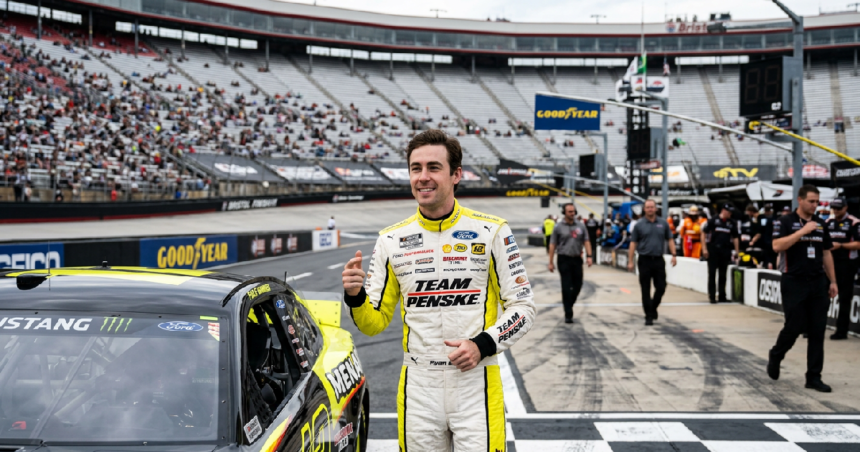
Ryan Blaney has secured the top starting spot at Bristol Motor Speedway, demonstrating a sharp return to form on the high-banked Tennessee short track. The Team Penske driver managed to outpace a competitive field during the final round of qualifying, marking a significant moment in his current campaign as he looks to solidify his standing among the frontrunners.
The session, which took place under challenging conditions, saw several heavy hitters struggle to find the right balance on the concrete surface. However, Blaney and his No. 12 crew seemed to have a handle on the track’s evolving grip levels from the moment the car rolled off the hauler. It is a performance that underscores Penske’s historical strength at these types of venues, where mechanical grip and driver precision outweigh raw aerodynamic data.
Short Track Mastery at Bristol
Qualifying at Bristol is often a frantic affair, leaving little room for error. The high banking and short lap times mean that even a slight hesitation in the corners can drop a driver several rows back on the grid. Blaney’s ability to find the limit without overstepping it proved to be the difference maker. He managed to string together consistent sectors, beating out several rivals who had shown impressive pace in earlier practice runs.
For Blaney, the pole position is more than just a statistical win; it is a tactical advantage. Starting at the front in Bristol allows a driver to dictate the pace of the race and, perhaps more importantly, avoid the mid-pack chaos that often characterizes early restarts on the half-mile oval. Track position is notoriously difficult to regain here, making the qualifying effort one of the most critical aspects of the entire race weekend.
Team Penske Find the Right Setup
The success at Bristol highlights the ongoing adjustments within the Team Penske garage. While the organization has faced ups and downs throughout the early part of the year, the speed shown by the 12 car suggests they have unlocked a specific setup window that works well on high-load concrete tracks. The car looked notably stable through the center of the turns, allowing Blaney to get back to the throttle sooner than his competitors.
Observers noted that the track conditions shifted slightly between the first and second rounds of qualifying. As the sun began to dip and temperatures cooled, the track gained grip, but it also became more sensitive to tire pressures. Blaney’s team appeared to anticipate these changes perfectly, ensuring the car was at its peak during the final shootout for the pole.
Chasing Success on Race Day
Securing the pole is only half the battle at a place like Bristol. The race itself is an endurance test that punishes equipment and drivers alike over several hundred laps. Blaney has shown speed here before, but converting a fast qualifying lap into a victory requires flawless pit stops and a car that can hold up through multiple tire cycles.
The competition remains stiff. Several other top-tier teams are lurking just behind on the starting grid, and with the way the current aerodynamic package behaves in traffic, the leader will have their mirrors full of challengers from the green flag. But starting from the clean air of the front row gives Blaney the best possible platform to control the narrative of the race.
As the field prepares for the main event, the focus shifts from single-lap speed to long-run consistency. If the No. 12 team can maintain the balance they found today, they will be the car to beat. For now, Blaney can take confidence in a job well done, having mastered one of the most intimidating qualifying sessions on the calendar.

This really answered my problem, thank you!