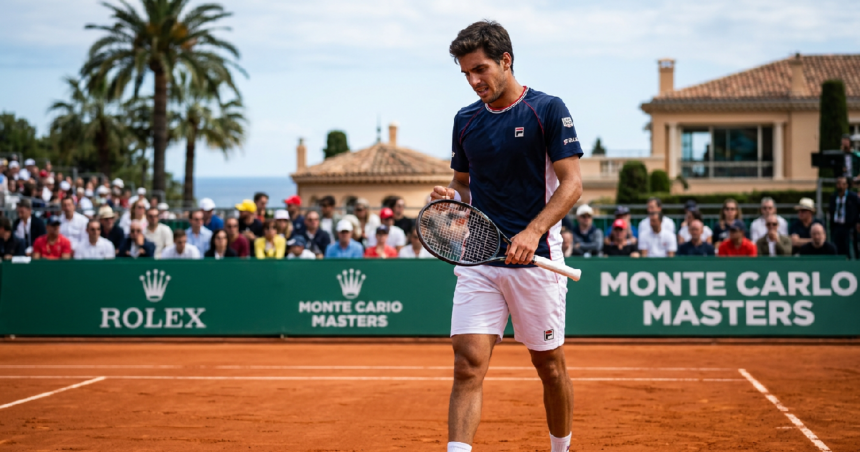
The Monte Carlo Masters often serves as a brutal litmus test for those harboring ambitions of joining the tennis elite. For Tomás Martín Etcheverry, his recent encounter on the clay courts of the principality ended as more than just a tournament exit; it reinforced a narrative regarding his performance against the highest-ranked players in the world. Following another defeat against a top-tier opponent, the Argentine’s record against top 10 opposition is approaching a notable level of winless consistency.
While losing to the world’s best is common for many on the tour, the cumulative weight of repeated attempts without a victory has placed Etcheverry near a modern ATP record that no player wants to claim. Reports indicate that his current streak of losses against such high-caliber opponents is nearing a historical mark previously set in the professional era. The struggle highlights the gap between being a consistent tour professional and a consistent threat to the global top 10.
A Recurring Barrier on the Big Stages
Etcheverry has long been regarded as a formidable presence on the circuit, particularly on clay. However, the step up from reliable competitor to giant-killer remains elusive. His latest performance followed a familiar script: periods of high-level shot-making and physical resilience that ultimately faltered when the pressure from elite opposition intensified in the closing stages.
This winless ledger is not necessarily a reflection of a lack of talent. Instead, it highlights the razor-thin margins that separate the top tier of the rankings from the chasing pack. In tennis, momentum is often psychological as much as it is tactical. Entering a match without a prior breakthrough against top-tier seeds can create a mental barrier that is difficult to dismantle under the bright lights of a Masters 1000 event.
Approaching Historical Marks
The comparison to previous winless streaks is becoming a pressing concern for Etcheverry’s team. Historical data suggests that very few players reach this frequency of match-ups against the top 10 without securing at least one upset. For Etcheverry, the next time he faces a highly seeded player, he will be playing against the weight of these mounting statistics as much as the opponent across the net.
And yet, the statistics are somewhat misleading regarding his overall career trajectory. The Argentine has reached the latter stages of major draws and maintained a ranking that ensures he frequently meets these top-tier players in the second week of tournaments. The volume of his losses is, in a sense, a byproduct of his consistency in reaching the rounds where the elite reside. But in professional sports, consistency without a signature win eventually becomes a narrative of its own.
The Road Forward on Clay
As the clay-court season progresses toward Paris, the pressure on the Argentine will likely intensify. Argentine tennis has a rich history of producing specialists who thrive in these environments, and Etcheverry remains a key figure for his nation in current draws. However, observers are now watching specifically to see if he can snap this streak before it reaches record-breaking proportions.
The mental hurdle is now the primary opponent. To break such a long streak, a player often needs more than just tactical adjustments; they need a lapse in their opponent’s armor or a moment of inspired brilliance that defies past results. Until that happens, every high-profile draw will be framed by this looming statistical threshold. Monte Carlo has provided the venue for many career-defining moments, but for Etcheverry, it served as a reminder that the gap between participating in the deep rounds and winning them remains one of the hardest distances to close in the sport.