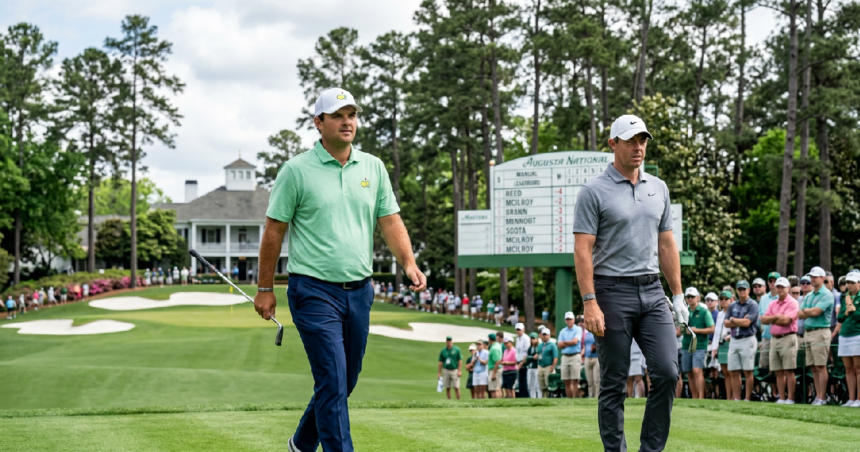
AUGUSTA, Ga. — Patrick Reed has once again found his rhythm at Augusta National, moving into a prominent position during the early stages of the Masters. The former champion, who has recently been the subject of much discussion regarding his future playing status across the various professional tours, put together a series of clinical holes to establish himself near the top of the leaderboard as the tournament began.
The opening day at the year’s first major often sets a standard for the week, and Reed’s early form has shifted the focus toward the competitive action on the course. He reportedly put together an impressive start, navigating the difficult opening stretch with the kind of precision that defined his previous victory here. His ability to take advantage of the par-five opportunities on the front nine appears to be a key factor in his early success.
Reed Shows Familiar Form
Reed has long been considered a specialist at this venue, possessing a short game that often thrives on the complex undulating greens. Reports from the course suggest he found early scoring opportunities through a combination of powerful driving and long-range putting. This resurgence comes at an important time for the American, who is looking to re-establish his standing among the elite in the game following a period of transition.
As the morning groups progressed toward the second half of the course, Reed was positioned among the leaders. The weather presented a challenge for the early starters, with cool temperatures and shifting winds requiring careful club selection. Players who managed to find the greens in regulation found themselves rewarded, while those missing in the wrong spots faced difficult recovery shots from the thick pine straw and steep run-offs.
McIlroy Stays in Contention
While Reed’s early surge drew attention, Rory McIlroy remained a central figure throughout the morning. The Northern Irishman arrived this week with considerable expectations surrounding his performance, as he continues his long-standing pursuit of success at Augusta. His round reportedly required a blend of patience and recovery, particularly after a few wayward shots in the early going.
McIlroy managed to steady his round as he approached the turn, reportedly finding a scoring rhythm that kept him within reach of the early leaders. Despite the pressure that naturally accompanies his appearances here, he appeared to handle the conditions with composure. His focus on a disciplined game plan suggested a player aware that the tournament cannot be won on the first day, but certainly can be lost through aggression in the wrong moments.
Mixed Results for the Field
The leaderboard reflected a diverse range of players capitalizing on the morning conditions. Tommy Fleetwood reportedly enjoyed a productive start to his tournament, showing the consistency that has characterized his recent appearances in major championships. Meanwhile, some of the newer faces in the field, including debutants from the European continent, appeared to handle the unique pressures of the setting with surprising ease.
There was also a nod to the tournament’s history as several veteran past champions showed glimpses of their former selves. These players, who rely more on experience and course knowledge than raw power, managed to navigate the first nine holes effectively, providing a reminder of why course history is so frequently cited as a factor at this event.
Others found the course more demanding. Bryson DeChambeau, whose power game is often a topic of conversation at Augusta, reportedly struggled to find a consistent rhythm. Off-target shots reportedly led to some difficult scrambles for par, highlighting the fine margin between success and frustration on this layout. His ability to stay patient during these stretches will likely determine his longevity in the tournament.
Looking Ahead to the Afternoon
As the early starters finished their rounds, the focus shifted to the later groups, including world number one Scottie Scheffler. Having enjoyed a period of sustained success over the past several seasons, Scheffler is widely regarded as the man to beat. The changing afternoon conditions, which often include firmer greens and more unpredictable winds, will provide a different set of challenges for the late starters attempting to chase down the lead.
The pace set by the likes of Reed and his contemporaries has established a clear benchmark for the rest of the field. For those currently in the mix, the goal remains to avoid the compounding errors that can quickly derail a round at Augusta National. As the surface continues to dry out, the strategic elements of the course are expected to become even more pronounced.