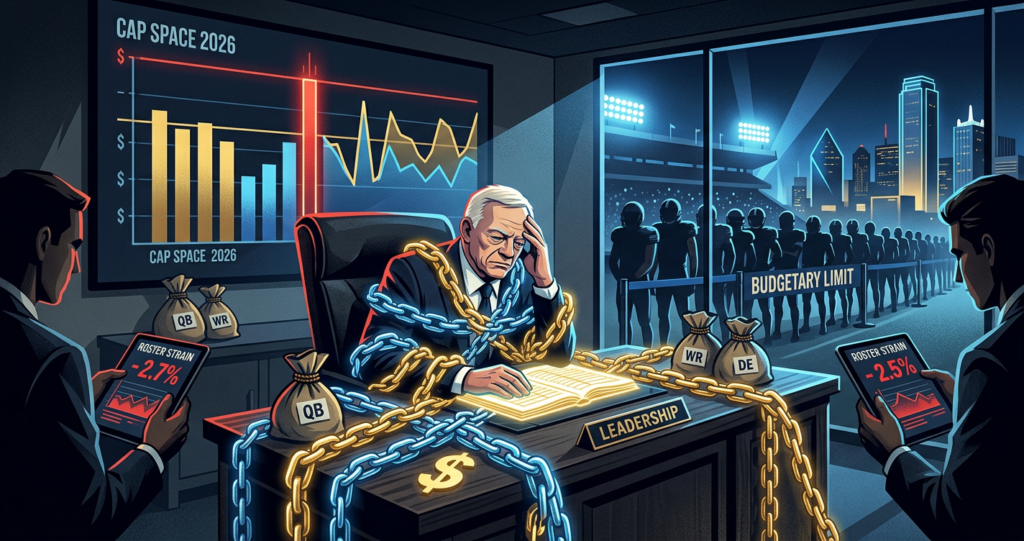
Running an NFL franchise in the salary cap era is often described as a game of Tetris, but for Jerry Jones and the Dallas Cowboys, the blocks have stopped fitting together. As the 2026 offseason gathers pace, the organization finds itself paralyzed by a series of massive contract extensions that haven’t just squeezed the budget—they have fundamentally altered how the team can compete in the free-agent market.
The “America’s Team” moniker usually implies a certain level of swagger, yet the mood around the Star in Frisco is one of cautious anxiety. With marquee players commanding record-breaking percentages of the cap, the front office is learning the hard way that waiting to pay your superstars only makes the eventual bill more painful. It is a predicament that has left the Cowboys watching from the sidelines while rivals aggressively retool.
The Cost of Hesitation in the Front Office
For several seasons, the Cowboys’ strategy appeared to be one of deliberate patience. However, in the hyper-inflated world of NFL contracts, patience is often indistinguishable from negligence. By allowing negotiations with their core trio—the quarterback, the primary edge rusher, and the lead wide receiver—to drag into the final years of their deals, Dallas lost all leverage.
The market for top-tier talent doesn’t reset; it only climbs. Every time a rival team signs a mid-level starter to a lucrative deal, the floor for the Cowboys’ stars rises. We are now seeing the result: a top-heavy roster where three or four players consume nearly half of the available salary pool. This leaves the coaching staff dependent on late-round draft picks and “bargain bin” veterans to fill out crucial depth positions.
And it isn’t just about the total dollar amount. The structure of these deals, laden with void years and massive signing bonuses, has created a “dead money” landmine for future seasons. While clubs in the Premier League deal with their own versions of financial fair play, the NFL’s hard cap offers no such wiggle room. If the money isn’t there, the player isn’t there.
Roster Depth Takes the Hit
The impact of these financial constraints is most visible in the secondary and on the offensive line. Once the pride of the franchise, the Cowboys’ O-line has seen veteran stalwarts depart because the team simply couldn’t match offers from teams with cleaner balance sheets. This creates a dangerous paradox: Dallas is paying a king’s ransom to its quarterback while simultaneously losing the protection required to keep him upright.
Defensively, the story is similar. When you have a generational talent at defensive end who is quite rightly demanding to be the highest-paid non-quarterback in league history, the budget for reliable cornerbacks and safeties evaporates. The Cowboys are increasingly becoming a team of “stars and scrubs,” a roster construction model that rarely holds up over the grueling 17-game regular season and the postseason gauntlet.
Critics argue that Jerry Jones’s loyalty to “his guys” has clouded the organization’s judgment. There is an emotional component to these negotiations that often overrides the cold, hard logic of cap management. In Dallas, stars aren’t just players; they are brands. Losing a brand-name player is seen as a failure of the Cowboys’ identity, even if it makes sense for the win-loss column.
Looking Toward a Restricted Future
What happens next will define the franchise for the remainder of the decade. There is a looming realization that the Cowboys may need to execute a “soft reset.” This involves the unthinkable: moving on from a Pro Bowl-level talent a year too early rather than two years too late. It is a philosophy mastered by the likes of the Kansas City Chiefs and the Baltimore Ravens—teams that have remained perennial contenders by knowing when to trade a high-priced asset for a haul of draft picks.
But the Cowboys rarely trade their way out of trouble. They prefer to double down. As they head toward the summer, the pressure to restructure existing deals will reach a fever pitch. Restructuring provides immediate relief, but it’s a high-interest loan against the future. Eventually, the bill comes due.
The 2026 season feels like a crossroads. If this expensive core cannot deliver a deep playoff run, the calls for a total teardown will become impossible to ignore. For a team that measures success only in Super Bowl rings, the current financial gridlock is more than just a bookkeeping error—it’s a barrier to the very history they are trying to reclaim.
Frequently Asked Questions
Why can’t the Cowboys just pay everyone what they want?
The NFL operates under a “hard” salary cap, meaning there is a strict limit on what a team can spend on its roster. Unlike some other sports, you cannot simply pay a luxury tax to exceed this limit. Every dollar given to a superstar is a dollar taken away from the supporting cast.
Is Jerry Jones solely responsible for these contract issues?
While Jerry Jones is the owner and General Manager, the nuances of the cap are handled by a dedicated front-office team, including Stephen Jones. However, the final philosophy—choosing which players to prioritize and when to strike—ultimately rests with the Jones family.
Could the Cowboys trade a star player to fix their cap?
Technically, yes. Trading a high-value player can clear significant future cap space and net valuable draft picks. However, the “dead money” (money already paid in bonuses that still counts against the cap) often makes trading a player mid-contract financially difficult in the short term.