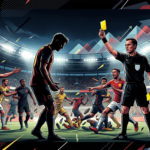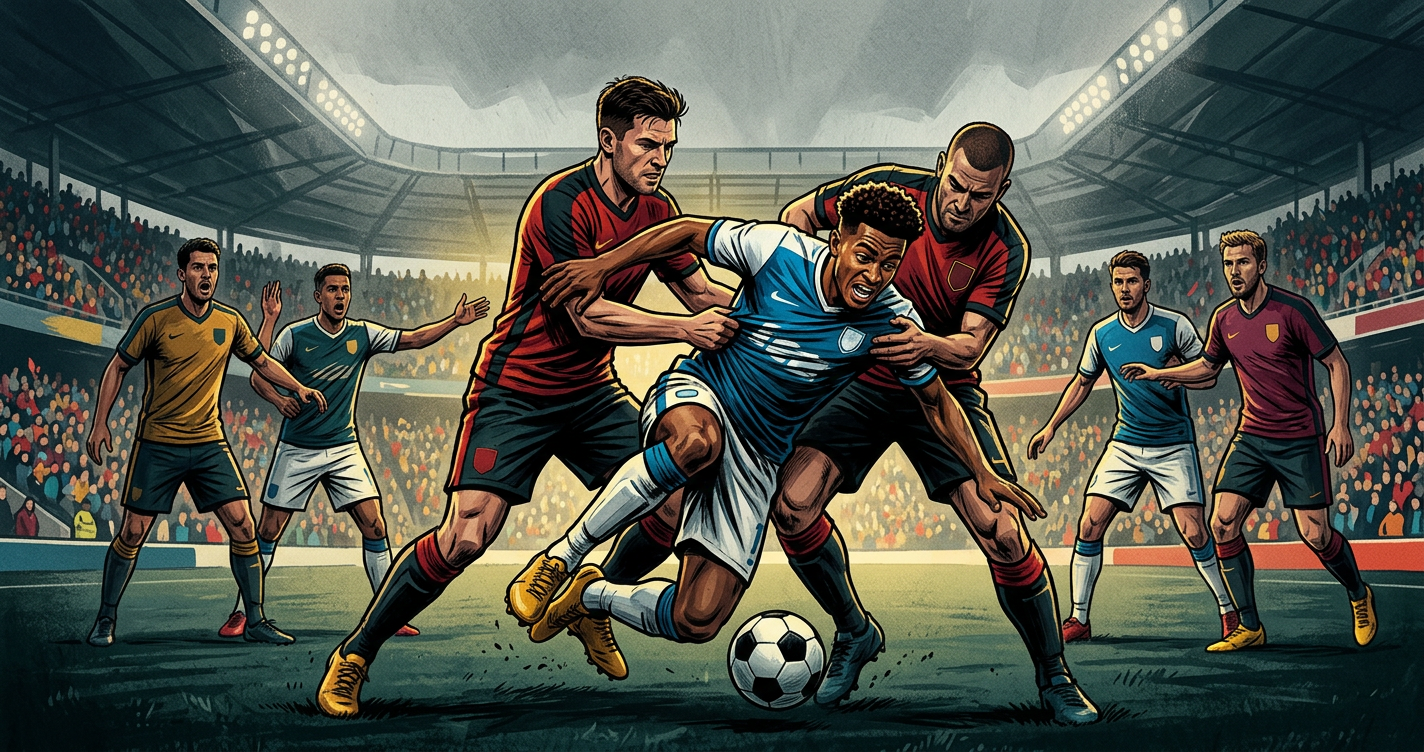
The delicate balance between individual flair and the bruising reality of modern football has shifted again this season. Across the Premier League and the EFL, a troubling pattern is emerging: the game’s creative catalysts are becoming the most targeted men on the pitch. While fans pay to see the nutmegs and the no-look passes, those performing them are increasingly being met with a level of physicality that borders on the systematic.
Recent data from the opening months of 2026 suggests a sharp uptick in “tactical” fouling. It is no longer just about stopping a counter-attack; it is about leaving a mark on the player who just made a defender look foolish. This isn’t exactly the “beautiful game” the marketing brochures promised, and refereeing bodies are now facing calls to intervene before the league’s most marketable assets are sidelined by the very physicality they are trying to outplay.
The rise of the targeted creative
In the current tactical climate, the “showboater” is frequently viewed as a liability to be neutralized rather than an artist to be admired. Coaches have become more sophisticated in how they deploy their enforcers. Instead of one player picking up a red card for a horror tackle, we see a rotation of minor infractions. Three different midfielders each take a turn “clogging” a flashy winger, effectively neutralizing the threat without any individual facing dismissal.
But the psychological element is what has changed most. There is a palpable sense of frustration from defenders when faced with high levels of skill. We’ve seen instances where a simple flick or a trick to skip past a man is met with a body check or a trailing leg that is clearly distinct from a genuine attempt to win the ball. It is a punishment for audacity, and currently, the punishment is working.
This trend complicates the broader movement in recruitment. As clubs shift strategy as the summer transfer window looms, scouts are reportedly looking for players who possess not just technical brilliance, but the physical “armor” to survive 90 minutes of being kicked. The era of the dainty No. 10 might be over, replaced by a requirement for powerhouse creators who can ride a reckless challenge.
Refereeing thresholds and the safety of the stars
The PGMOL (Professional Game Match Officials Limited) has been under fire for its handling of persistent fouling. The argument from the stands is simple: if a player is fouled five times in 20 minutes, it shouldn’t matter if each individual foul was “minor.” The cumulative effect is what destroys the flow of the game and the safety of the player.
And yet, the cards aren’t coming out quickly enough. Referees seem hesitant to ruin the “spectacle” by over-officiating, but in doing so, they are allowing the spectacle to be systematically dismantled by defensive units. There is a fine line between a physical league and a lawless one. If the league’s most creative players feel unprotected, the product suffers. We are seeing more “safe” passes and fewer risks because the cost of a mistake—or even a success—is a painful trip to the turf.
The ripple effect on international football
This hardening of domestic play comes at a precarious time for the global game. With the World Cup approaching, the fitness of elite players is under more scrutiny than ever. National team managers are watching their stars get battered week in and week out, praying they make it to June in one piece.
The pressure is particularly high for squads already dealing with external distractions. For example, the uncertainty surrounding Iran’s participation has already cast a shadow over tournament preparations. Add to that the logistical hurdles facing the North American World Cup, and the last thing FIFA wants is a tournament missing its biggest names due to preventable injuries sustained in league play.
How clubs are reacting
Managers are not taking this lying down. Some have reportedly begun compiling dossiers of unpunished fouls to present to the league. Others are taking a different route: adaptation. We are seeing more emphasis in training on “releasing the ball early”—a direct instruction that discourages the very flair fans want to see. When a manager tells a winger to “stop holding onto it,” they aren’t just talking about ball retention; they are talking about injury prevention.
Even established stars are finding themselves at the center of this debate. Rumors regarding high-profile moves often hinge on whether a player can handle the physical toll of their current environment. There has been significant chatter about technical players seeking exits to leagues viewed as “more protected,” a trend that could see a drain of talent if the Premier League doesn’t address its disciplinary standards. Even stalwarts at the top clubs aren’t immune to these pressures, as seen in the ongoing discussions surrounding Federico Chiesa’s future at Liverpool.
What the future holds for the flair player
The next few months will be telling. If the current trend of intensifying fouls continues without a corresponding increase in yellow and red cards, the “showboater” may become an endangered species in English football. The game is faster than ever, which means collisions are more high-impact.
The solution isn’t to ban tackling or turn football into a non-contact sport. It’s about recognizing the difference between a tactical foul and a malicious one. Until referees are empowered to protect the dribblers from being systematically targeted, the bruising reality will continue to overshadow the brilliance.
Frequently Asked Questions
What exactly is considered a ‘tactical foul’ in this context?
A tactical foul is a deliberate trip or pull intended to stop a promising attack or disrupt a player’s momentum. In the current climate, these are often “low-impact” fouls that don’t result in a booking but, when used repeatedly, effectively neutralize creative players.
Why don’t referees just give more yellow cards?
Referees are often encouraged to manage the game and keep 22 players on the pitch to maintain the flow. There is a fear that early bookings for minor fouls can lead to a “card-happy” reputation or force a red card later in the game for a challenge that wouldn’t normally deserve one.
Are certain teams more prone to targeting players?
Teams that rely on a low-block defensive system or a “heavy metal” pressing style often use physicality to bridge the gap in technical skill. It isn’t necessarily one specific team, but rather a strategy used by squads that prioritize disruption over possession.