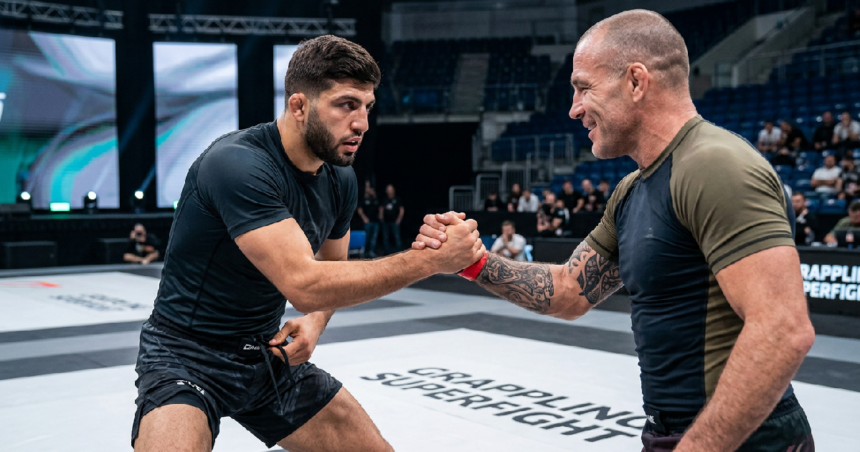
Arman Tsarukyan is making a unexpected detour from his path toward UFC gold. Despite establishing himself as the definitive number-one contender in the UFC lightweight division, the 27-year-old standout has been booked for a grappling superfight against an MMA legend in a move that has caught many in the industry by surprise.
The announcement confirms that Tsarukyan will compete outside the Octagon, engaging in a high-stakes grappling match that pits his elite wrestling against a veteran of the sport. While Tsarukyan remains under exclusive contract with the UFC for mixed martial arts, these types of professional grappling exhibitions have become a popular way for top-tier fighters to stay active and pick up significant paydays without the concussive trauma of a full MMA bout.
Stepping onto the mats against a veteran icon
Tsarukyan has long been regarded as one of the most physically imposing and technically sound grapplers in the 155-pound division. His rise through the ranks has been defined by a stifling top game and a relentless pace. By testing himself against a legend of the sport in a pure grappling environment, Tsarukyan is looking to maintain his competitive edge during a period where the UFC title picture remains somewhat congested.
For the uninitiated, these cross-promotional appearances are usually sanctioned by the UFC, provided they do not involve striking. Organizations like ADCC, Polaris, and various independent superfight promoters have increasingly sought out names like Tsarukyan to headline cards, bridging the gap between the niche world of Brazilian Jiu-Jitsu and the mainstream MMA audience.
The choice of opponent is particularly telling. Facing a legend offers Tsarukyan a “no-lose” scenario: a victory reinforces his status as the new breed of elite grappler, while a competitive showing against a specialist doesn’t hurt his standing in the UFC rankings. It also serves as a tactical stay-busy fight while he waits for the winner of the upcoming lightweight title clashes.
The strategic risk of outside competition
While fans often celebrate seeing their favorite fighters compete more frequently, these excursions are not without risk. Knee injuries, ligament tears, and rib displacements are common in high-level nogi grappling. For a man who is arguably one win away from becoming a world champion, the decision to step onto the mats requires a high level of confidence in his body and his preparation.
And yet, the benefits are clear. Tsarukyan has often spoken about the need to keep his “timing” sharp. MMA is a sport where long layoffs can lead to “cage rust,” and by competing in a high-pressure environment against an experienced legend, he ensures that his competitive instincts remain honed. It’s a move that echoes the careers of other greats who refused to sit on the sidelines while waiting for their deserved title shots.
Looking toward the UFC lightweight horizon
The MMA community will be watching this match closely, not just for the technical display, but to see Tsarukyan’s physical condition. If he emerges unscathed, the pressure on the UFC to book his title fight will only intensify. He has already proven he can compete with the very best in the world, and this grappling stint is merely a footnote in what many believe is an inevitable championship reign.
For now, the focus shifts from the four-ounce gloves to the rash guard. Tsarukyan is betting on himself, moving outside his comfort zone to prove that his grappling transcends the boundaries of the cage. It is a bold move for a fighter in his prime, but one that fits the “anytime, anywhere” persona he has cultivated since joining the UFC roster.
Frequently Asked Questions
Will this affect Arman Tsarukyan’s UFC ranking?
No, professional grappling matches do not impact a fighter’s official MMA ranking or their professional record. These events are considered separate disciplines. However, an injury during the match could potentially delay his next scheduled UFC appearance.
Can UFC fighters usually compete in other organizations?
Most UFC contracts are exclusive regarding MMA, meaning fighters cannot compete in cage fighting for other promoters. However, the UFC often grants “one-off” permissions for grappling, Brazilian Jiu-Jitsu, or even certain boxing exhibitions, provided the timing doesn’t conflict with their primary obligations.
Why didn’t Tsarukyan just wait for a title fight?
The timeline for UFC title fights can be unpredictable due to champion injuries, scheduling conflicts, or promotional decisions. Rather than sitting idle for six to nine months, many fighters choose to compete in grappling to stay sharp, earn extra income, and keep their names in the headlines.