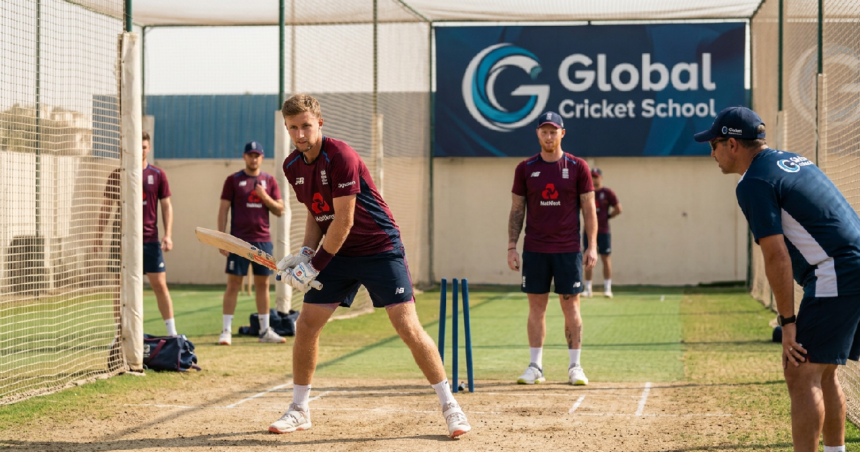
The quest for dominance in subcontinental conditions has long been the Achilles’ heel of English cricket. For decades, the sight of elite batters playing all around a straight ball in Mumbai or getting tied in knots by spin in Colombo has been a recurring theme. But a modern shift in preparation, spearheaded by the Global Cricket School, is quietly changing the technical blueprint for the national side’s leading stars.
Recent sessions involving members of the England setup have focused on dismantling the traditional “English” way of playing—characterized by hitting with the grain of the pitch—and replacing it with a more versatile, wristy approach essential for survival on low-bounce, high-turn tracks. The Global Cricket School (GCS) has become an unofficial finishing school for those looking to bridge the gap between county-ground comfort and international excellence.
Beyond the Nets: Replicating the Subcontinental Grind
Preparation in England often relies on high-tech indoor centers and bowling machines that, while efficient, fail to replicate the sheer unpredictability of a dusty fifth-day pitch. The Global Cricket School bridges this gap by providing specific, curated environments that mirror the distinct challenges of different Asian venues. Whether it is the red soil of Mumbai or the black soil of Delhi, batters are forced to rethink their footwork and bat-swing.
England’s white-ball and red-ball specialists have increasingly sought out these stints to refine their “sweep” varieties. It is no longer just about the conventional sweep; the GCS environment encourages the mastery of the reverse sweep, the lap, and the slog-sweep, often against local net bowlers who specialize in the subtle variations of flight and dip that are rarely encountered on the domestic circuit.
And it isn’t just for the batters. England’s spin contingent has utilized these facilities to understand the “science of the surface.” Learning how to use the crease and vary the pace of the delivery to extract maximum purchase from unresponsive pitches is a skill that takes years to master, but intensive stints at the school have accelerated that growth for several fringe players and established internationals alike.
The Technical Evolution of England’s Middle Order
The impact of this specialized training has been evident in recent tours. The ability to trust one’s defense while maintaining a high strike rate against spin is the hallmark of the current “Bazball” era. By training at the GCS, players are able to experiment with aggressive shot-making in a high-intensity, low-consequence environment before taking those risks in a Test match.
Cricket analysts have noted that England’s younger crop appears far more comfortable “smothering” the spin—reaching the pitch of the ball before it has a chance to deviate. This technical tweak is a direct result of the repetitive, focused drills emphasized by the school’s coaching philosophy. Instead of the static net sessions common in the UK, these sessions are dynamic, forcing players to read the bowler’s hand rather than just the trajectory of the ball.
The school’s influence also extends to the mental side of the game. Subcontinental cricket is as much an endurance test as it is a skill test. Training in the heat and humidity, facing endless overs of quality spin, builds a level of “battle-hardiness” that helps England’s stars remain composed when the pressure mounts in the middle of a packed stadium in Ahmedabad or Galle.
Looking Toward the Next Subcontinental Cycles
As the international calendar becomes increasingly crowded, the window for this kind of specialized preparation narrows. However, the relationship between England’s top-tier talent and the Global Cricket School suggests that individualized “power camps” are becoming the preferred method over traditional long-form team tours.
With major ICC events and critical World Test Championship points often decided in the spin-friendly conditions of the East, this partnership is no longer a luxury—it’s a necessity. The goal is simple: ensure that when an England batter steps onto the field in India or Pakistan, they aren’t just hoping to survive; they are looking to dominate.
Frequently Asked Questions
What exactly is the Global Cricket School?
The Global Cricket School is a specialized training institution that provides cricketers with the facilities and coaching required to master specific conditions, particularly those found in the Indian subcontinent. They offer access to varied pitch types and local specialist bowlers to help players refine their techniques away from their home environments.
Which England players have used these facilities?
While the school keeps specific client lists private, it has been widely reported that several core members of the England Test and ODI squads, including top-order batters and frontline spinners, have attended camps there to prepare for major tours in Asia.
Why can’t England players just train at home?
The weather and soil types in England make it almost impossible to replicate the conditions of a dry, spinning subcontinental pitch. Even under heaters and in indoor marquees, the ball behaves differently. The Global Cricket School offers the heat, humidity, and specific soil compositions that are essential for authentic preparation.