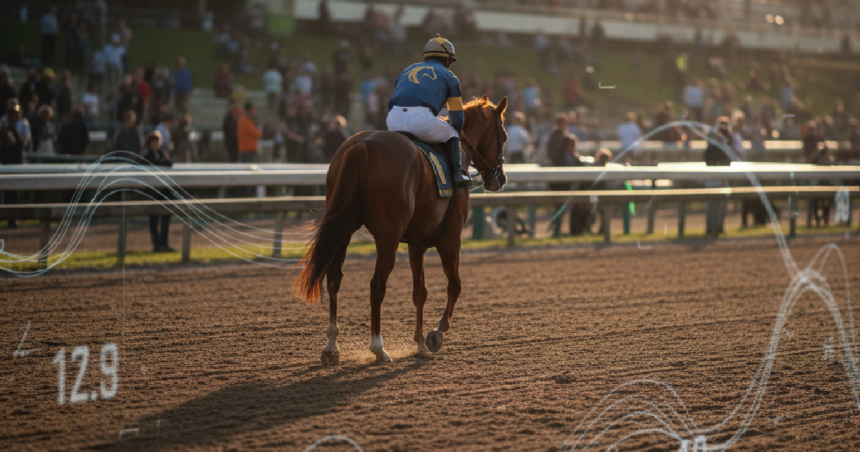
Horse racing stands in a peculiar position as the global sports betting industry faces its most intense regulatory scrutiny in a generation. While online casinos and fast-paced sportsbooks are frequently cited in discussions regarding problem gambling, the “King of Sports” has largely managed to avoid the sharpest edge of the reformist blade. This immunity isn’t accidental, but rather a byproduct of the sport’s inherent structure—a cadence often described as “slow play” in an era of instant gratification.
The deliberate pace of the paddock
Unlike the relentless churn of a digital slot machine or the rapid-fire nature of “in-play” tennis betting, horse racing operates on a schedule defined by the physical limitations of the animals. There is a natural pause between races—typically 30 minutes—that acts as a forced “cool-down” period for bettors. You cannot instantly reload a race that has just finished. You must wait for the next post time.
This structural delay is becoming a focal point for regulators who are increasingly worried about “event frequency.” In jurisdictions like the UK and Australia, where gambling reform is currently a major legislative priority, the distinction between high-velocity games and horse racing is becoming clearer. While a gambler can lose thousands in minutes on a “black box” algorithm, the same amount of damage is harder to inflict when you’re waiting for a hurdle race at Aintree or a sprint at Meydan.
And yet, this “slow play” isn’t just about the clock. It involves a level of engagement—studying form, checking the ground conditions, and observing the parade ring—that shifts the activity from impulsive tapping to a more considered, analytical process.
Why horse racing remains a regulatory outlier
The gambling industry is currently grappling with a wave of “affordability checks” and mandatory deposit limits. However, racing advocates argue that the sport should be treated differently than high-stakes casino games. The argument hinges on the “skill” element. Because winners are determined by biological variables and professional judgment rather than a random number generator, proponents claim it carries a lower risk of the “chasing” behavior that characterizes problem gambling.
British racing, in particular, has been vocal about this. Industry leaders have warned that treating a £10 bet on the Grand National the same way as a £10 spin on a digital roulette wheel is a fundamental misunderstanding of the risk profile. There is a fear that over-regulation, intended to capture the “whales” of the casino world, will inadvertently choke the lifeblood of trainers and breeders who rely on the levy from racing bets.
But this outlier status is a double-edged sword. As other forms of gambling are pushed into the shadows or restricted by heavy friction, racing risks becoming the last visible “gateway” for new bettors. If the sport doesn’t maintain its own rigorous standards, it could find itself caught in the next net cast by lawmakers.
Data and the shift toward transparency
Current reports suggest that horse racing bettors generally exhibit more stable betting patterns than those who frequent online slots. The data, while still being parsed by various gaming commissions, indicates that the average duration of a racing “session” is punctuated by significant breaks. The lack of “instant loss” feedback—where a bet is settled, and a new one is available within seconds—is the sport’s greatest defense.
However, the rise of international racing and 24-hour betting cycles is starting to challenge this “slow play” narrative. With access to tracks in the US, South Africa, and Asia, a determined bettor can now bypass the natural 30-minute break. This evolution is where the sport may lose its protection as an “outlier.”
The road ahead for the industry
The coming months will be critical as several major markets finalize their gambling white papers and reform acts. Horse racing must prove that its traditional model is a feature, not a bug, of a healthy betting ecosystem. For the trainers, owners, and fans, the stakes couldn’t be higher. If the sport is bundled into general gambling restrictions, the financial fallout for rural economies and equestrian sport could be devastating.
For now, the paddock remains a sanctuary of sorts—a place where the clock still matters, and the speed of the horse is the only thing that truly dictates the pace of the play.
Frequently Asked Questions
Why is horse racing considered lower risk for problem gambling?
The primary reason is the “slow play” nature of the sport. There is typically a 30-minute gap between races, which prevents the rapid, repetitive betting cycles found in casino games or high-frequency digital slots. This provides bettors with a natural “cool-down” period.
Are horses or digital games more regulated?
Currently, both fall under general gambling legislation, but many regulators are moving toward “tiered” systems. These would place stricter limits on high-velocity digital games (like online slots) while allowing more leeway for “skill-based” activities like horse racing and sports betting.
Does 24-hour global racing change the risk?
Yes. Critics argue that because fans can now bet on races in different time zones around the clock, the natural “break” in a local race card is being eroded. This could make racing look more like high-frequency gambling in the eyes of regulators.