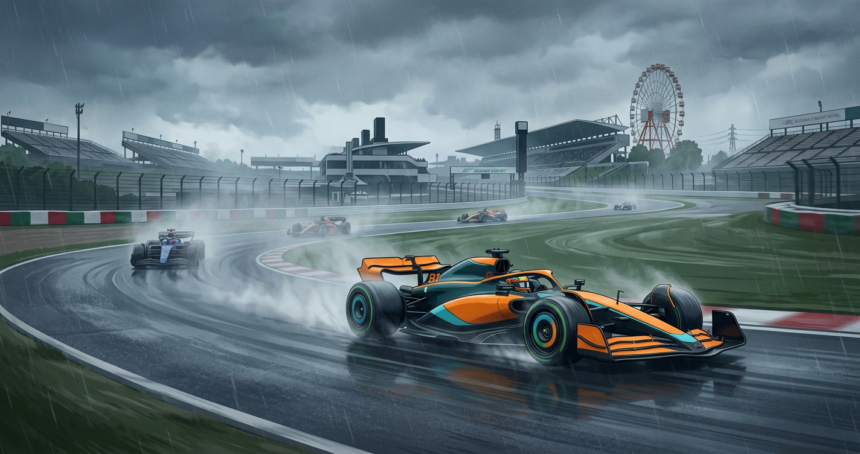
Intermittent rain and a greasy track surface couldn’t stop Oscar Piastri from making a statement at Suzuka on Friday. The McLaren driver topped the second practice session for the Japanese Grand Prix, navigating a late flurry of activity as teams wrestled with uncooperative weather and limited running time.
The afternoon session was largely a wash-out for the first forty minutes. Damp patches and a persistent drizzle kept the heavy hitters in the garages, with fans in the grandstands left watching the clock rather than the cars. But as the rain eased in the final stages, Piastri fitted the soft tires and found a window of grip to jump to the top of the timing sheets.
While the headline speed looks good on paper for the Woking-based outfit, the lack of meaningful data across the field has left more questions than answers heading into the weekend. Most teams opted to preserve their intermediate tire allocations, wary of a forecast that remains unpredictable for Saturday’s qualifying.
Rain Dampens spirits but McLaren finds a rhythm
Friday at Suzuka is usually about finding the limit through the daunting ‘S’ Curves and Degner. Instead, today was a lesson in patience. Most of the grid completed only a handful of laps, with some drivers, including the championship-leading Red Bulls, opting not to set a representative time at all during the second hour of track action.
Piastri’s pace, while set during a brief period of improving conditions, suggests McLaren has maintained the high-speed efficiency that made them so competitive here last year. The MCL38 looked stable through the first sector, though Piastri was quick to downplay the significance of the session given how few cars were on track simultaneously.
The Australian’s performance comes at a vital time. With the 2026 season seeing a tightening of the pack behind Red Bull, every session counts. Even a disrupted FP2 provides a shred of data on crossover points—the moment when it’s faster to switch from wet-weather tires to slicks. That knowledge could be the difference between a podium and a mid-pack finish if the rain returns on Sunday.
Pressure mounts on the chasing pack
RB’s Yuki Tsunoda gave the home crowd something to cheer about early in the session, showing strong pace on the intermediate tires before the track dried out. The local hero is under immense pressure to perform this weekend, and his comfort in the tricky conditions was evident. However, like everyone else, he struggled to find a clean run once the slick-tire window opened.
Mercedes and Ferrari remained largely anonymous during the rain-affected hour. Lewis Hamilton and George Russell had shown flashes of promise in the drier morning session, but they chose a conservative approach in the afternoon. For Ferrari, the focus remains on tire degradation—a historical weakness that they hoped to test during the long runs that never materialized today.
The lack of long-run data is particularly frustrating for teams trying to understand the new asphalt patches around the circuit. Without those 10-15 lap stints, engineers are essentially guessing at the degradation rates for the hard and medium compounds. This uncertainty often leads to more aggressive, varied strategies on race day, which might be the only way to topple the Red Bull dominance.
What to expect for Qualifying
The fallout from a lost practice session usually hits on Saturday morning. FP3 will now become a frantic “all-in” session where teams must compress three hours of testing into sixty minutes. Expect a very busy track from the moment the green light flashes, as drivers scramble to find a balance for qualifying while simultaneously checking their fuel loads for the race.
If the weather remains dry for the rest of the weekend, the advantage likely swings back to Max Verstappen. However, the McLaren garage will take plenty of confidence from Piastri’s ability to switch on the tires in difficult circumstances. And while we see the logistical hurdles of major global events like the upcoming World Cup, F1’s logistical challenge this weekend is purely down to the clouds over the Mie Prefecture.
For now, Piastri sits at the top, but the real hierarchy remains hidden under the clouds of Suzuka. We’ll know by tomorrow afternoon if McLaren truly has the legs to challenge for the front row.
F1 Japan Practice FAQ
Why did so few cars run during FP2?
F1 regulations limit the number of sets of tires teams can use over a weekend. When the track is “half-wet,” teams often stay in the garage to avoid wasting tires that might be needed for a fully wet qualifying or race. Driving in drizzling conditions also carries a high risk of a crash with very little data reward.
Does Piastri’s time mean McLaren is faster than Red Bull?
Not necessarily. Many top drivers didn’t set a “push” lap on the soft tires during the brief dry window at the end of the session. While the McLaren looks quick, Red Bull remains the team to beat based on their form in the fully dry FP1 session earlier in the day.
What happens if it rains during qualifying?
If qualifying is wet, the grid could be shuffled significantly. Suzuka is a high-consequence track where one small mistake in the rain results in a trip to the barriers. Drivers who found a good “feel” for the intermediates today, like Tsunoda and Piastri, might have a slight head start in terms of confidence.