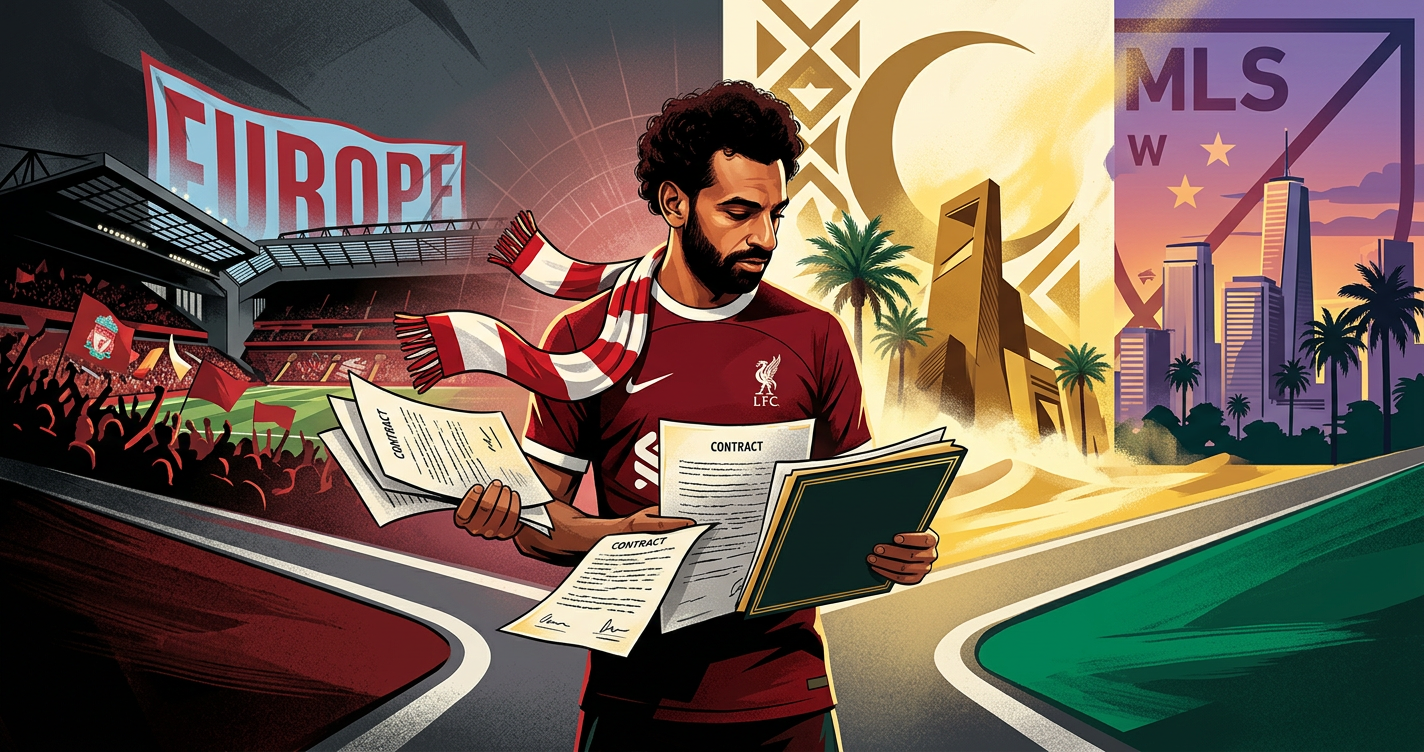
Liverpool’s squad planning for the post-Jurgen Klopp era has hit its first major seismic shift. While supporters have spent months bracing for the possibility of Mohamed Salah’s exit, the specific catalyst for his impending departure has remained a subject of intense speculation. New reporting now suggests that the deadlock wasn’t necessarily about the total financial package, but rather the structural length of the commitment required by the club’s ownership.
According to sources familiar with the negotiations, the Merseyside club and Salah reached a fundamental impasse regarding a contract extension that would have seen him finish his career at Anfield. It appears Fenway Sports Group (FSG) opted to maintain their rigid internal policy regarding aging players, refusing to offer the long-term security Salah’s camp viewed as non-negotiable for a player of his fitness levels.
The timing is particularly sensitive for the Reds. With the club in the midst of a transition under new management, losing a player who consistently guarantees 20-plus goals a season creates a massive void that few in the current market can realistically fill. Even as clubs shift strategy as the summer transfer window looms, finding a direct replacement for the Egyptian International remains the hardest job in football.
The sticking point in the Salah negotiations
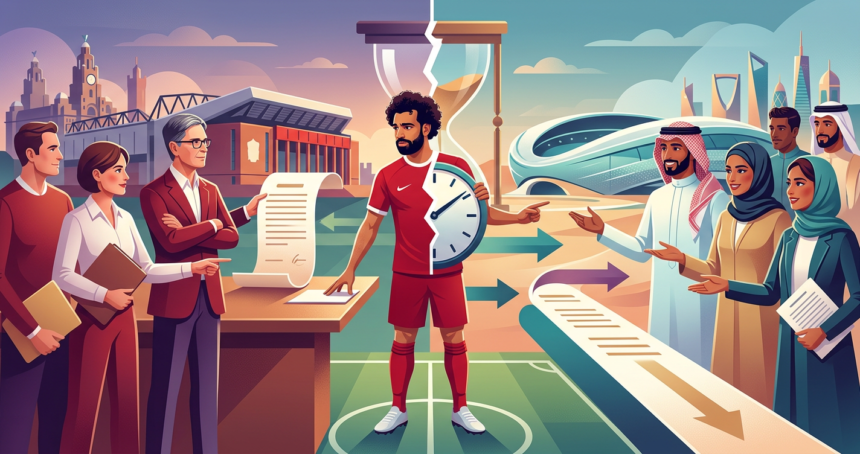
The details emerging from the talks indicate that Salah was seeking a four-year deal that would have kept him in the Premier League until 2030. Liverpool’s recruitment team, led by Richard Hughes and Michael Edwards, reportedly preferred a shorter “2+1” arrangement. This structure would have guaranteed only two years, with the third year triggered by a specific number of appearances.
For most players in their early 30s, that is a standard offer. But Salah, who is famously meticulous about his physical conditioning, reportedly felt his durability deserved a more firm commitment. And when it became clear that FSG would not break their wage-to-age structure for a singular star, the decision was made to facilitate an exit rather than risk losing him on a free transfer next year.
The move represents a cold, calculated risk from the Liverpool hierarchy. It’s the kind of decision Michael Edwards became famous for during his first stint at the club — selling high on legendary players before their value falls off a cliff. But replacing Salah’s output and his psychological gravity in the dressing room is a far more daunting task than offloading any previous star.
A power shift to the Saudi Pro League
While European giants have hovered, the destination for the prolific winger seems almost certainly to be the Middle East. The Saudi Pro League has made no secret of its desire to land the most high-profile Arab athlete in the world. For the league, Salah represents more than just a footballer; he is a crown jewel for their sporting project.
Financially, the deal is expected to set records for an outgoing transfer at Liverpool, given his remaining contract value. The influx of cash will be vital for the Reds, but money doesn’t always buy goals. We’ve seen other Premier League giants struggle for years after losing their “talisman” figure — think of Tottenham after Harry Kane or Arsenal in the post-Henry years.
The knock-on effect of this move will be felt across the league. If Liverpool cannot find an immediate successor, the gap between themselves and the likes of Manchester City and Arsenal could widen. Rumors have already begun linking the club to several young wingers in the Bundesliga and Eredivisie, but none possess the proven reliability of the man they are letting go.
How the Liverpool squad is reacting
Inside the AXA Training Centre, the mood is reportedly one of professional resignation. Many of the long-standing senior players have grown up at the club alongside Salah. His departure marks the final dissolution of the front three that defined the Klopp era — Roberto Firmino, Sadio Mane, and now Salah.
Virgil van Dijk and Alisson Becker now remain as the final pillars of that Champions League-winning spine. Management will need to work quickly to ensure this departure doesn’t trigger a “domino effect” among other veterans who might be questioning the club’s short-term competitive ambitions.
The club is also working to manage the optics of the move. By framing it as a mutual agreement based on contract length rather than a “falling out,” they hope to give Salah the hero’s farewell his ten seasons of service deserve. But for the fans on the Kop, no amount of financial sense or structural logic will make watching their greatest modern goalscorer leave any easier.
What the future holds for the Reds
The focus now shifts entirely to the recruitment department. With the summer window approaching, Liverpool are expected to be the most active team in the market. They need pace, they need a left-footed creator, and they need a personality that isn’t intimidated by the shadow of the man who came before.
It’s a tall order. But this is the path FSG has chosen: a model based on sustainability and youthful potential rather than sentimentality for aging legends. Whether that model can still deliver Premier League titles in 2026 and beyond remains the biggest question on Merseyside.
Frequently Asked Questions
Why didn’t Liverpool just give Salah the four years he wanted?
The club’s ownership, FSG, has a strict policy against offering long-term, high-wage contracts to players over 32. They believe the risk of physical decline outweighs the benefit of keeping a legacy player, even one as fit as Salah.
Where is Mohamed Salah likely to go?
The Saudi Pro League is the frontrunner. Sources indicate multiple clubs in the kingdom are prepared to offer him a contract that dwarfs anything available in Europe, both in terms of salary and duration.
How will Liverpool replace Salah’s goals next season?
The club is expected to target a younger, high-ceiling winger this summer. While they may not find one player to score 30 goals, the tactical shift may involve spreading the scoring burden more evenly across the existing front line of Darwin Nunez, Cody Gakpo, and Luis Diaz.