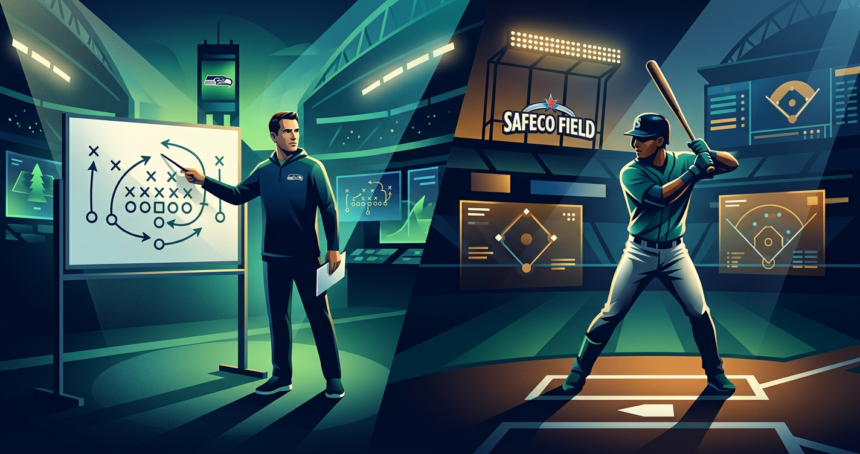
The morning air in Seattle often carries the weight of the city’s sports anxieties, and lately, there is plenty to chew on. From the Seahawks’ defensive identity under a new coaching regime to the Mariners’ perennial struggle to find a consistent bat, the discourse at 710 Seattle Sports has become the essential pulse-check for fans across the Pacific Northwest. Specifically, the dynamic between Brock Huard and Mike Salk continues to define how the region processes its sporting successes and failures.
It isn’t just about the scores. Local sports radio has shifted into a more analytical gear, driven by Huard’s technical breakdowns as a former NFL quarterback and Salk’s role as the Everyman antagonist who isn’t afraid to poke the bear. As the city prepares for a pivotal summer, the conversations happening on the airwaves are setting the stage for what fans expect at Lumen Field and T-Mobile Park.
The Huard Factor and the Seahawks’ New Direction
Every Tuesday, the “Brock Huard’s Chalk Talk” segment remains the gold standard for tactical analysis in the region. Since Mike Macdonald took the reins of the Seahawks, the level of scrutiny on defensive schemes has reached a fever pitch. Huard has a knack for translating complex “simulated pressures” and “creepers” into language the average commuter can understand. And yet, the underlying tension remains: how quickly can a young roster adapt to a system that demands so much cognitive load?
The consensus on the show recently has centered on the maturation of the defensive front. There’s a palpable sense that the era of “bend but don’t break” is over, replaced by a more aggressive, chess-match style of football. But as Salk often points out, scheme only takes you so far if the personnel isn’t finishing plays. This push-and-pull between the technical “why” and the results-oriented “what” is where the show finds its highest gear.
The timing is critical. As the league looks toward the draft and the shifting strategies of professional recruitment, Seattle’s front office is under more pressure than ever to maximize the talent around their core. The radio analysis often mirrors the anxiety of a fan base that has seen the 49ers and Rams maintain a stranglehold on the NFC West for too long.
Mariners and the Perpetual Search for Offense
If the Seahawks represent hope, the Mariners often represent a specific brand of frustration. The recent discourse on 710 has been dominated by the team’s offensive philosophy. For years, the “Control the Zone” mantra was the north star for the organization, but as Salk frequently argues, strikeouts are still mounting, and the middle of the order hasn’t always provided the protection their young superstars need.
The analysis lately hasn’t been kind to the status quo. There is a growing demand for a more balanced approach—one that doesn’t just rely on the long ball or high-walk rates but finds a way to move runners and put pressure on opposing pitchers. When the Mariners’ pitching staff is this elite, wasting a performance because of a lack of run support feels like a civic tragedy. Huard often brings a unique perspective here, comparing the “grind” of a baseball season to the preparation required for a 17-game NFL slate, noting that the mental fatigue of a hitting slump requires a different kind of locker room leadership.
Bridging the Gap Between Analytics and Emotion
What makes the Seattle sports media ecosystem unique right now is the collision of high-level data and raw emotion. We live in an era where fans care as much about Expected Weighted On-Base Average (xwOBA) as they do about a walk-off hit. Salk tends to lean into the emotional narrative—what does this mean for the city? Are we being too patient?—while Huard tethers the conversation to the reality of the tape.
This balance is necessary because Seattle is in a transition period. The “Legion of Boom” days are a distant memory, and the “refuse to lose” Mariners era is even further back. The city is searching for a new identity. Whether it’s discussing the logistical hurdles of major events coming to the region or the day-to-day roster moves, the analysis is increasingly focused on long-term sustainability rather than quick fixes.
And let’s not ignore the Kraken. While hockey talk was once a novelty in the Emerald City, it has become a staple of the morning drive. The tactical nuances of an NHL power play are now dissected with the same fervor as a third-and-long conversion. It’s a sign of a maturing sports market that no longer lives and dies by just one or two teams.
What Lies Ahead for Seattle Sports
Looking forward, the narrative is likely to be dominated by the Seahawks’ training camp and the Mariners’ trade deadline moves. There is a sense that the grace period for the new Seahawks staff will be short, given the talent on the roster. Expectations are a dangerous thing, but in Seattle, they are currently through the roof.
We’re also seeing a shift in how fans consume this news. It’s no longer just the live broadcast; it’s the podcasts, the social media clips, and the deep-dive articles that follow. The conversation doesn’t end when the microphones turn off at 10:00 AM. It evolves throughout the day, fueled by a fan base that is as informed as any in the country.
Frequently Asked Questions
How has the Seahawks’ defensive identity changed this year?
According to recent analysis, the team has shifted away from the predictable “Cover 3” schemes of the past toward a more versatile, disguise-heavy approach under Mike Macdonald. The focus is on making every play look the same pre-snap to confuse opposing quarterbacks, a topic Brock Huard has detailed extensively.
What is the main criticism of the Mariners’ current roster build?
The primary concern shared by many analysts is the “all or nothing” nature of the lineup. While the pitching is championship-caliber, the offense often struggles with high strikeout rates, leading to a lack of consistency. The debate usually centers on whether the team needs high-contact veterans to balance out the power hitters.
Why is morning sports radio still so influential in Seattle?
Seattle has a unique “commuter culture” where radio remains a dominant medium. But more importantly, the chemistry between different personalities—like the technical expertise of a former pro versus the passionate fan perspective—creates a forum for the city to vent and celebrate together, acting as a daily town square for sports fans.