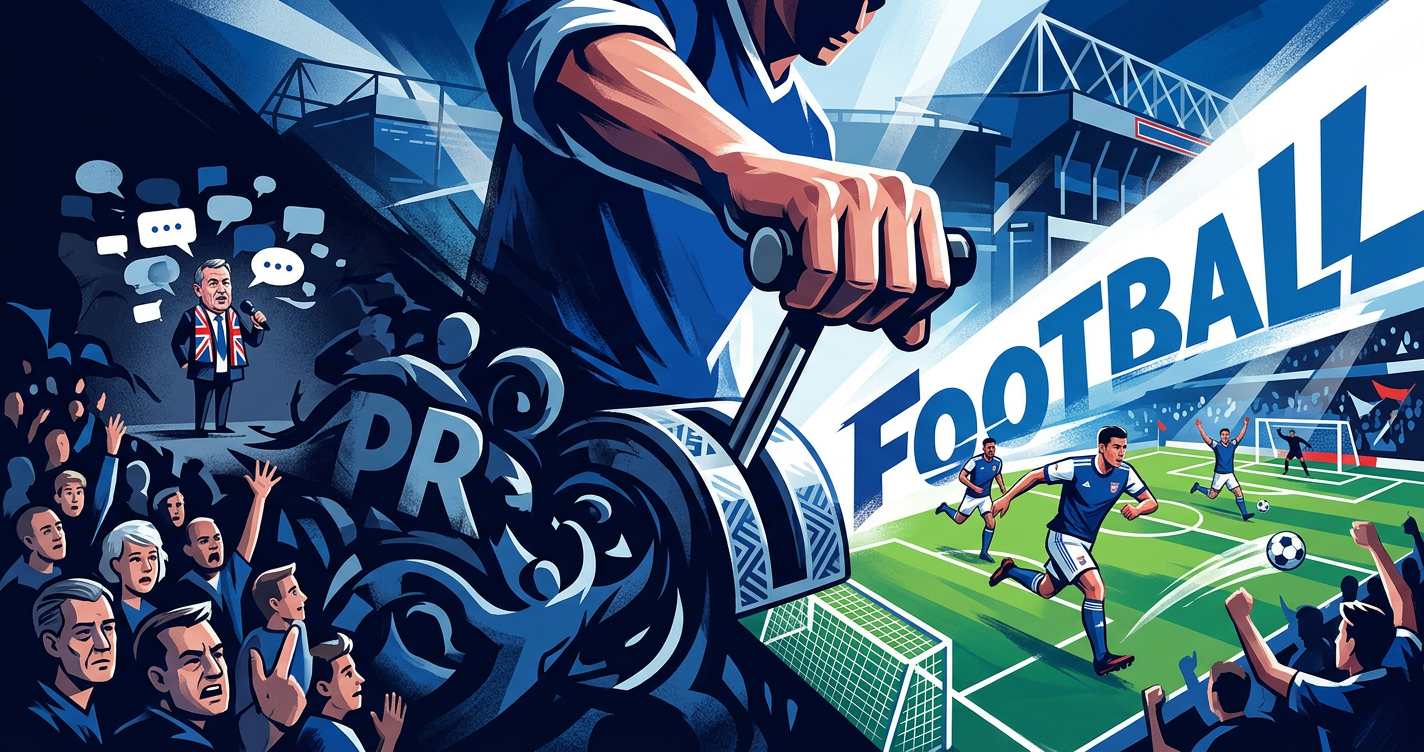
Ipswich Town are attempting to turn the page on a week of intense off-field scrutiny after a high-profile political guest sparked a backlash from the Portman Road faithful. The club, which has prided itself on community cohesion and a family-first atmosphere since its return to the Premier League, found itself in the eye of a social media storm that threatened to overshadow their recent progress on the pitch.
The controversy began when images surfaced of Reform UK leader Nigel Farage being hosted at the stadium. For many supporters, the optics of the visit felt like a departure from the club’s inclusive values. But as the dust settles, the hierarchy has moved to clarify that the visit was not a political endorsement, even as the PR fallout proved difficult to contain.
Managing the Portman Road Optics
Ipswich is a club currently enjoying its most successful period in decades. Under the leadership of the current coaching staff and ownership group, they have transitioned from League One to the top flight with remarkable speed. This success has brought global eyes to Suffolk, and with that comes a heightened sensitivity to brand associations.
The internal response to the Farage visit has been one of damage control. Sources suggest the club was caught off guard by the speed of the online reaction. While stadium guests are frequently a mix of local dignitaries, sponsors, and public figures, the polarising nature of modern UK politics meant this specific appearance was never going to pass without comment. The club’s social media channels were flooded with fans questioning why a figure associated with divisive rhetoric was given such visibility.
And yet, the club has been firm in its stance that Portman Road remains an open house for everyone. The challenge for the communications team was to acknowledge the frustration of a vocal segment of the fanbase without generating further headlines. They have largely succeeded by shifting the focus back to footballing matters, though the incident serves as a reminder of how quickly “identity” can become a battleground for modern sports teams.
Focusing Back on the Pitch
While the boardroom dealt with the PR side of things, the squad remains focused on a demanding schedule. The jump to the Premier League has required a significant adjustment in recruitment and tactical flexibility. As fans look ahead, the upcoming summer transfer window will be the real test of whether the club can sustain its top-flight status long-term.
The friction between the club’s commercial activities and its community roots is not unique to Ipswich. However, because Town has been such a “feel-good” story in English football recently, the contrast felt sharper. Fans at recent matches have made their voices heard, with some groups emphasizing that the club belongs to the people of Ipswich first and foremost.
It’s a balancing act. Every Premier League club wants to expand its reach and attract investment. But as this week proved, that expansion cannot come at the cost of alienating the core season-ticket holders who stood by the team during the darker days in the third tier.
Future Safeguards for the Town Brand
Moving forward, the club is reportedly reviewing its guest protocols. This isn’t about banning individuals, but rather about understanding the narrative impact of certain invitations. In a world where every gesture is captured on a smartphone and broadcast globally, there is no such thing as a “low-key” visit from a major political figure.
The owners have invested heavily in the local area, which has built up a massive amount of goodwill. That equity is what allowed the club to weather this storm relatively quickly. But the “PR disaster,” as some have dubbed it, was a sharp lesson in the risks of the Premier League spotlight. The club has effectively answered the questions raised—not necessarily with a formal apology, but with a commitment to maintaining the community-focused environment that defined their rise.
The focus now returns to the points tally. If results continue to go their way, this week will be remembered as a minor distraction. If the team hits a slump, however, these are the types of off-field narratives that critics often point to as a sign of lost focus. For now, the Blues seem to have righted the ship.
Frequently Asked Questions
Why was the visit so controversial for Ipswich fans?
Ipswich Town has built its recent reputation on a very specific set of community and inclusive values. Because Nigel Farage is a deeply polarizing figure in UK politics, many fans felt his presence at the stadium clashed with the club’s “everyone is welcome” messaging, leading to a clash between the club’s identity and the guest’s public persona.
Did the club issue a formal apology?
The club’s strategy has been more about clarification than a direct apology. They have sought to distance the institution from any political affiliation, emphasizing that hosting guests is a standard part of stadium operations and does not constitute a formal endorsement of any political party or ideology.
Will this affect the club’s summer transfer plans?
Unlikely. While the PR noise was loud, it hasn’t affected the club’s financial standing or its ability to recruit. As the summer window approaches, the recruitment team remains focused on high-performance metrics and scouting, independent of the recent headlines surrounding stadium guests.