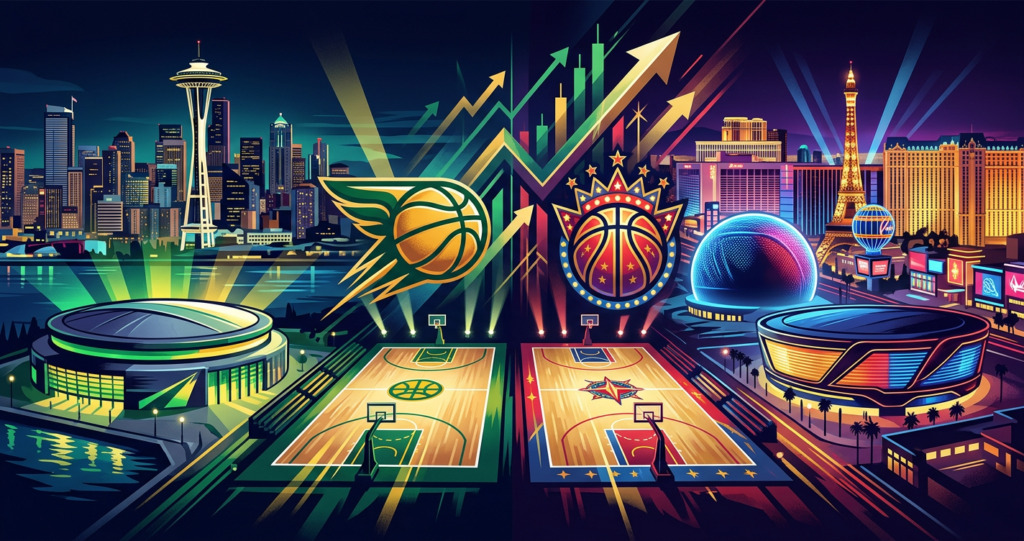
The map of professional basketball is officially growing. After years of speculation, commissioner Adam Silver and the NBA Board of Governors have cleared the way for the league to add two new franchises in Seattle and Las Vegas. The move marks the first time the league has expanded since the addition of the Charlotte Bobcats in 2004, ending more than two decades of a 30-team format.
The resolution, passed during meetings this week, brings a long-awaited homecoming to the Pacific Northwest and a high-stakes entry into the Mojave Desert. For Seattle, it represents the healing of a wound that has been open since the SuperSonics departed for Oklahoma City in 2008. For Las Vegas, it solidifies the city’s rapid transformation into the world’s most concentrated hub for professional sports.
The Emerald City regains its pulse
In Seattle, the news was met with the kind of relief usually reserved for a championship win. The infrastructure for this moment has been in place for years. Since the renovation of Climate Pledge Arena, the city has been “NBA-ready” in every sense but the official paperwork. The arena already hosts the WNBA’s Seattle Storm and the NHL’s Kraken, and league officials have reportedly been impressed by the sustained fan interest in the region despite nearly twenty years without a resident NBA team.
The return of the SuperSonics name and colors was always considered a non-negotiable part of this process. Sources close to the negotiations suggest the league has worked to ensure that the history, records, and iconic “Space Needle” branding will return to Seattle, much like the Cleveland Browns’ history stayed in Ohio when that NFL franchise moved. This isn’t just a new team; it’s a restoration.
Las Vegas secures the final piece of the puzzle
If Seattle’s entry is about nostalgia and tradition, Las Vegas is about the future of the league’s business model. “Sin City” has already proven it can support the NFL, NHL, and WNBA. The success of the NBA Summer League, held annually in Vegas, served as a multi-year audition that the city passed with flying colors.
The bid for the Las Vegas franchise was bolstered by the city’s unique ability to merge sports with global entertainment. With several world-class venues already operational and new, basketball-specific projects in the pipeline, the league saw an opportunity to create a “destination” franchise. This team is expected to capitalize on the massive tourist influx, ensuring that the arena remains a difficult place for visiting teams to play, regardless of the local fan base size.
Western Conference shifts and the cost of entry
Adding two teams to the Western United States creates an immediate logistical puzzle for the league office. With 32 teams, the NBA will likely need to move one current Western Conference franchise to the Eastern Conference to maintain balance. Early indications suggest the Minnesota Timberwolves, Memphis Grizzlies, or New Orleans Pelicans would be the primary candidates for a move East, a change that would significantly reduce their annual travel miles.
But the biggest hurdle wasn’t the travel — it was the price tag. While the official expansion fees have not been publicly disclosed, industry experts suggest the buy-in for each ownership group likely reaches into the billions. These funds will be distributed among the existing 30 team owners, providing a massive short-term cash infusion. This payout was reportedly a major factor in the owners’ unanimous approval, particularly as the league looks to navigate a changing media rights environment.
Timeline for the first tip-off
Fans shouldn’t expect to see these teams on the court tomorrow. The process of building a front office, scouting players, and conducting an expansion draft is a multi-year endeavor. The league expects both franchises to begin play within the next two to three seasons.
The expansion draft will be the next major flashpoint. Current teams will be allowed to “protect” a certain number of players on their roster, while the new Seattle and Las Vegas teams will pick from the remaining pool. It is an egalitarian way to build a roster, though it often leaves expansion teams struggling for relevancy in their first few years. However, with the current depth of talent in the NBA, many league insiders believe these two new teams could be competitive sooner than their historical predecessors.
And while the focus is on the new markets, the league’s growth doesn’t happen in a vacuum. As teams prepare for the arrival of new competitors, other shifts are happening across the sporting world. From broadcast strategies evolving to clubs shifting recruitment tactics, the business of sports is becoming increasingly aggressive. The NBA’s expansion is simply the largest piece of that growing pie.
Frequently Asked Questions
Which current team will move to the Eastern Conference?
The league hasn’t made a final decision, but geography favors Minnesota, New Orleans, or Memphis. Moving any of these teams would create a more balanced 16-16 split between the conferences and help alleviate the grueling travel schedules that teams in the middle of the country currently endure.
When can fans buy tickets for the new teams?
Official ticket sales are likely at least 18 to 24 months away. Both Seattle and Las Vegas will first need to establish their corporate identities, announce their official team names (though Seattle is almost certain to be the SuperSonics), and set up their ticketing infrastructure. Expect “deposits” for season tickets to open much sooner.
How will the expansion draft work?
The NBA has used a “protection” system in the past. Existing teams can protect eight players on their roster. The expansion teams then take turns selecting the unprotected players, with a limit on how many players can be taken from a single existing team (usually one). This prevents any one franchise from being completely gutted by the expansion process.