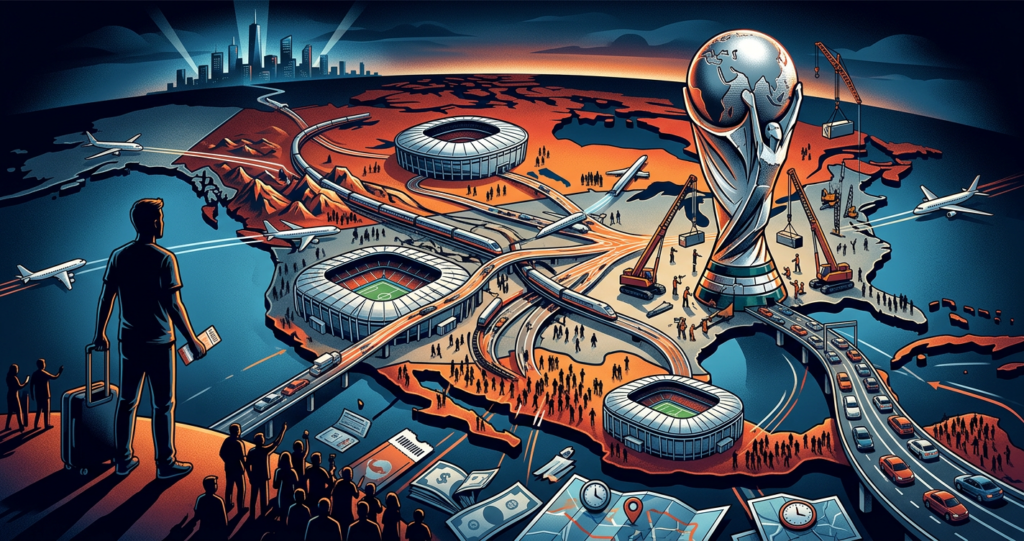
The logistics of the 2026 World Cup are beginning to crystallize as the three host nations enter the final two-year sprint toward kickoff. With 48 teams, 16 cities, and a geographical footprint spanning thousands of miles, the scale of this tournament dwarfs any previous iteration of the FIFA showpiece. For fans in the UK and Europe, the sheer distance between venues like Vancouver, Mexico City, and Miami is starting to dictate travel plans and budget considerations.
Planning for such a massive event has moved beyond stadium construction into the trickier realms of geopolitics and transport infrastructure. While the 1994 World Cup in the United States remains the most attended tournament in history, the 2026 edition introduces complexities that didn’t exist thirty years ago. The triple-hosting arrangement necessitates a level of cross-border cooperation that is currently being tested by shifting political climates in North America.
The Trump Factor and Cross-Border Movement
One of the most discussed variables in the tournament’s organization is the return of Donald Trump to the White House. During his first term, Trump was instrumental in the “United Bid” securing the hosting rights, but his administration’s focus on stricter border enforcement has raised questions about the ease of movement for international visitors. FIFA traditionally requires host nations to provide guarantees regarding visa-free travel for players, officials, and fans holding valid tickets.
And while the U.S. government has historically accommodated major sporting events, the “three-nation” element makes this different. Fans could theoretically watch a group stage match in Monterrey and need to be in Los Angeles 48 hours later. Any bottlenecks at the San Ysidro or El Paso crossings could derail the fan experience. Organisers are reportedly working on “fan corridors” or expedited processing for tournament credential holders, though specific details remain scarce as policy priorities shift in Washington.
For UK fans, the visa waiver program (ESTA) usually simplifies things, but the requirement to potentially clear customs multiple times between the USA, Canada, and Mexico adds a layer of bureaucracy that European travelers, used to the borderless Schengen Area, may find frustrating.
Ticket Fever and the Secondary Market
Demand for tickets is expected to break all existing records. FIFA has shifted its ticketing strategy toward a more digital-centric model, aiming to curb the rampant black market that plagued the Qatar and Russia tournaments. However, initial “expressions of interest” have already reached into the tens of millions.
Pricing remains a point of contention. While FIFA seeks to maximise revenue to offset the massive organizational costs, there is pressure to keep a portion of tickets affordable for local fans in Mexico and the U.S. domestic market. Early indications suggest that “Category 4” tickets—traditionally the cheapest and reserved for residents of the host nation—will be in high demand but short supply. For the traveling contingent from England, Scotland, or Wales, the cost of entry is only one part of the equation; accommodation prices in cities like New York and Seattle during match weeks are already projected to triple.
The strategy for many Premier League fans might mirror recent trends in club recruitment, focusing on efficiency and early planning. Just as clubs shift strategy as the summer window looms, fans are being advised to lock in travel hubs rather than chasing specific team locations until the final draw is made.
Infrastructure and the Fan Experience
Each host nation brings a different set of challenges. Mexico’s Estadio Azteca is undergoing significant renovations to meet modern FIFA standards, while several NFL stadiums in the United States are dealing with the “grass vs. turf” debate. FIFA mandates natural grass, which means several venues will need to temporarily swap out their synthetic surfaces, a process that is both costly and technically demanding.
Transport is perhaps the biggest hurdle. Unlike the 2022 tournament in Qatar, where fans could attend multiple games in one day via a single metro line, the 2026 World Cup will rely heavily on air travel. The “cluster” model—where teams stay within a specific region (West Coast, Central, or East Coast)—is intended to minimize travel fatigue. But for the fans, following a team that progresses to the knockout stages could mean 1,500-mile flights between cities.
And it’s not just about the flight time. The U.S. airport infrastructure is notorious for delays, and several of the host cities lack the robust public transit systems found in London or Berlin. In cities like Kansas City or Houston, the “last mile” journey to the stadium will likely rely on ride-sharing and dedicated shuttle buses, which will be tested to their limits.
The Road to 2026
As the qualifying cycles progress, the excitement is building, but so is the realization of the tournament’s footprint. The 2026 World Cup will be a test of whether a continent-sized event can maintain the intimate “festival” feel that fans love. For now, the focus remains on the hammers and nails of stadium upgrades and the diplomatic pen-strokes of visa agreements. The world is coming to North America; whether the infrastructure is ready for the world remains the defining question of the next two years.
World Cup 2026 Logistics FAQ
Do I need a separate visa for each of the three host countries?
Currently, visitors must meet the entry requirements for each individual nation. While there is talk of a unified “World Cup Fan ID” similar to Russia’s 2018 system, nothing has been confirmed. UK citizens will likely still need an ESTA for the US and an eTA for Canada.
How will the 48-team format affect ticket availability?
More teams means more matches—104 in total—which theoretically means more tickets. However, the expansion also increases global demand, particularly from nations that rarely qualify. High-profile matches in major cities will remain incredibly difficult to secure.
Will matches be played on artificial turf?
No. FIFA has been clear that all matches must be played on natural grass. Many U.S. stadiums that usually use turf are investing millions to install temporary or permanent grass pitches that can withstand the rigours of the tournament.